REVIEW ARTICLE
PREVALENCE OF BURNOUT SYNDROME AMONG NURSING PROFESSIONALS IN INTENSIVE CARE UNITS: A SYSTEMATIC REVIEW
PREVALENCIA DEL SÍNDROME DE BURNOUT ENTRE PROFESIONALES DE ENFERMERÍA EN UNIDADES DE CUIDADOS INTENSIVOS: UNA REVISIÓN SISTEMÁTICA
PREVALÊNCIA DA SÍNDROME DE BURNOUT EM PROFISSIONAIS DE ENFERMAGEM NAS UNIDADES DE TERAPIA INTENSIVA: UMA REVISÃO SISTEMÁTICA
https://doi.org/10.31011/reaid-2026-v.100-n.1-art.2674
1Veronica de Souza Manhães
2Diego Gama Linhares
3David da Mata Ferreira Fidelis
4Maria Luísa Caldas Barboza de Oliveira
5Millena de Oliveira Lima
6Alessandro Barbosa de Oliveira
7Pedro Quintanilha Pinto
8Letícia Aguiar da Silveira
9Rodrigo Gomes de Souza Vale
1Universidade Estácio de Sa, Campos dos Goytacazes, Rio de Janeiro, Brazil, Orcid: https://orcid.org/0009-0008-0343-3115,
2Universidade Estácio de Sa, Campos dos Goytacazes, Rio de Janeiro, Brazil, Orcid: https://orcid.org/0000-0002-2901-3273
3Universidade Estácio de Sa, Campos dos Goytacazes, Rio de Janeiro, Brazil, Orcid: https://orcid.org/0009-0007-1716-9362
4Universidade Estácio de Sa, Campos dos Goytacazes, Rio de Janeiro, Brazil, Orcid: https://orcid.org/0009-0006-6601-3017
5Universidade Estácio de Sa, Campos dos Goytacazes, Rio de Janeiro, Brazil, Orcid: https://orcid.org/0009-0007-3603-6207
6Universidade Estácio de Sa, Campos dos Goytacazes, Rio de Janeiro, Brazil, Orcid: https://orcid.org/0009-0002-2368-8461
7Universidade Estácio de Sa, Campos dos Goytacazes, Rio de Janeiro, Brazil, Orcid: https://orcid.org/0009-0008-5352-1201
8Universidade Estácio de Sa, Campos dos Goytacazes, Rio de Janeiro, Brazil, Orcid: https://orcid.org/0009-0008-4064-5352
9Universidade do Estado do Rio de Janeiro, Rio de Janeiro, Brazil, Orcid: https://orcid.org/0000-0002-3049-8773
Corresponding Author
Diego Gama Linhares
R. São Francisco Xavier, 524 - Maracanã, Rio de Janeiro - RJ, Brazil. 20550-013 - E-mail: diegamalin@gmail.com,
Submission: 19-10-2025
Approval: 14-01-2026
ABSTRACT
Objective: To analyze the prevalence of burnout syndrome among nursing professionals in intensive care units. Methods: The Systematic Reviews and Meta-Analyses (PRISMA) criteria and the PICOS strategy were used in this systematic review. The Joanna Briggs Institute (JBI) instrument was used to assess methodological quality. This study was registered in the international prospective register of systematic reviews (PROSPERO). Results: The search databases were PubMed, Scopus, Cochrane, and Scielo, totaling 1,594 publications. After applying the selection criteria, 18 studies were included in this systematic review. Different instruments were used to assess burnout syndrome, with 83% of the studies analyzed using the Maslach Burnout Inventory (MBI). The total sample of studies included in this systematic review was 3,964 participants. Conclusion: This study concluded that burnout syndrome is highly prevalent among nursing professionals.
Keywords: Nursing; Burnout Syndrome; ICU.
RESUMEN
Objetivo: Analizar la prevalencia del síndrome de burnout entre profesionales de enfermería en unidades de cuidados intensivos. Métodos: En esta revisión sistemática se utilizaron los criterios PRISMA (Revisiones Sistemáticas y Metaanálisis) y la estrategia PICOS. Se empleó el instrumento del Instituto Joanna Briggs (JBI) para evaluar la calidad metodológica. Este estudio se registró en el registro prospectivo internacional de revisiones sistemáticas (PROSPERO). Resultados: Las bases de datos de búsqueda fueron PubMed, Scopus, Cochrane y Scielo, con un total de 1594 publicaciones. Tras aplicar los criterios de selección, se incluyeron 18 estudios en esta revisión sistemática. Se utilizaron diferentes instrumentos para evaluar el síndrome de burnout; el 83% de los estudios analizados utilizaron el Inventario de Burnout de Maslach (MBI). La muestra total de estudios incluidos en esta revisión sistemática fue de 3964 participantes. Conclusión: Este estudio concluyó que el síndrome de burnout tiene una alta prevalencia entre los profesionales de enfermería.
Palabras clave: Enfermería; Síndrome de Burnout; UCI.
RESUMO
Objetivo: Analisar a prevalência da síndrome de Burnout em profissionais de enfermagem nas unidades de terapia intensiva. Métodos: Foram utilizados os critérios Systematic Reviews and Meta-Analyses (PRISMA) e a estratégia PICOS nesta revisão sistemática. Para a avaliação de qualidade metodológica foi utilizado o instrumento de Joanna Briggs Institute (JBI). Este estudo foi registrado no registro prospectivo internacional de revisões sistemáticas (Prospero). Resultados: As bases de busca foram PubMed, Scopus, Cochrane e Scielo, totalizando 1594 publicações. Após a utilização dos critérios de seleção, 18 estudos foram incluídos nesta revisão sistemática. Foram utilizados diferentes instrumentos na avaliação da síndrome de Burnout, sendo que 83% dos estudos analisados pela ferramenta Maslach Burnout Inventory (MBI). A amostra total dos estudos incluídos nesta revisão sistemática foi de 3964 participantes. Conclusão: Este estudo concluiu que há grande prevalência da síndrome de Burnout em profissionais da enfermagem.
Palavras-chaves: Enfermagem; Síndrome de Burnout; UTI.
INTRODUTION
The World Health Organization has recognized Burnout syndrome in the latest edition of the International Classification of Diseases (ICD-11) as an “occupational phenomenon” resulting from poorly managed, challenging work environments. In recent years, research on Burnout syndrome has increased, with a particular focus on healthcare workers. The incidence of this syndrome among these professionals is associated with prolonged exposure to emotional demands and extensive working hours without adequate rest. These factors have led to increased stress and high levels of both physical and emotional fatigue. 1
Healthcare professionals present higher rates of absenteeism due to psychological distress and burnout compared with workers in other sectors. Psychosocial factors, such as continuous exposure to work-related stress, increase the vulnerability of these professionals to presenteeism (reduced productivity), as well as to the development of anxiety and depression. Occupational stress is associated with workplace conditions that negatively affect physical and mental health, thereby favoring the onset of professional burnout. In addition, healthcare systems in developed countries face additional pressures due to financial constraints, population aging, technological advancements, and difficulties in retaining professionals.2,3
Certain risk factors may increase the likelihood of developing Burnout syndrome, including conflicts and financial difficulties in the workplace, excessive working hours, as well as communication or organizational problems. Healthcare professionals (physicians, nurses, and social workers) are at higher risk, as they maintain daily contact with severely ill individuals. 4–6
This study is justified by the need to update knowledge on the health status of nursing professionals, particularly due to the increasing incidence of Burnout syndrome in this population. The study systematically addresses this topic and aims to analyze the prevalence of Burnout syndrome among nursing professionals working in intensive care units.
METHODS
The Systematic Reviews and Meta-Analyses (PRISMA) criteria were used in this systematic review. 7. PROSPERO is an international registry of systematic reviews, and this study was registered under the number CRD420251117262.
Inclusion Process
The PICOS strategy 8 was used and defined as follows: Population: nursing professionals; Intervention: not applied; Comparison: not applied; Outcome: Burnout syndrome; Study design: descriptive studies. Studies involving systematic reviews and meta-analyses, as well as studies not published in peer-reviewed journals, were excluded.
Searches were conducted from June 2, 2025, to June 10, 2025. Boolean operators (AND, OR) were used to construct the search string: Nurses AND “Intensive Care Units” AND Burnout. Descriptors followed the Medical Subject Headings (MeSH) and the Health Sciences Descriptors (DeCS). The database-specific search strategies were as follows: PubMed: (“nurse s”[All Fields] OR “nurses”[MeSH Terms] OR “nurses”[All Fields] OR “nurse”[All Fields] OR “nurses s”[All Fields]) AND “Intensive Care Units”[All Fields] AND (“burnout s”[All Fields] OR “burnout, psychological”[MeSH Terms] OR (“burnout”[All Fields] AND “psychological”[All Fields]) OR “psychological burnout”[All Fields] OR “burnout”[All Fields] OR “burnouts”[All Fields]); Scopus: (TITLE-ABS-KEY (nurse) AND TITLE-ABS-KEY (burnout) AND TITLE-ABS-KEY (intensive AND care AND units)); Cochrane: Nurse AND Burnout AND Intensive Care Unit in Title, Abstract, or Keywords; SciELO: Nurse AND Burnout. The Zotero software (version 6.0.30) was used in the study screening process.
Methodological Quality Assessment and Risk of Bias
The Joanna Briggs Institute (JBI) instrument was used to assess methodological quality. This tool consists of eight questions specifically designed to evaluate the methodology of descriptive cross-sectional studies, namely: Q1 – Were the criteria for inclusion in the sample clearly defined? Q2 – Were the study subjects and setting described in detail? Q3 – Was the exposure measured in a valid and reliable way? Q4 – Were objective, standard criteria used to measure the condition? Q5 – Were confounding factors identified? Q6 – Were strategies to deal with confounding factors stated? Q7 – Were the outcomes measured in a valid and reliable way? Q8 – Was appropriate statistical analysis used? For study categorization, the symbols Y = Yes, N = No, and UC = Unclear were used for each question. The classification criteria were as follows: “Low quality” when up to three “Yes” responses were present; “Moderate quality” when four to six “Yes” responses were present; and “High quality” when seven or more “Yes” responses were present.9
RESULTS
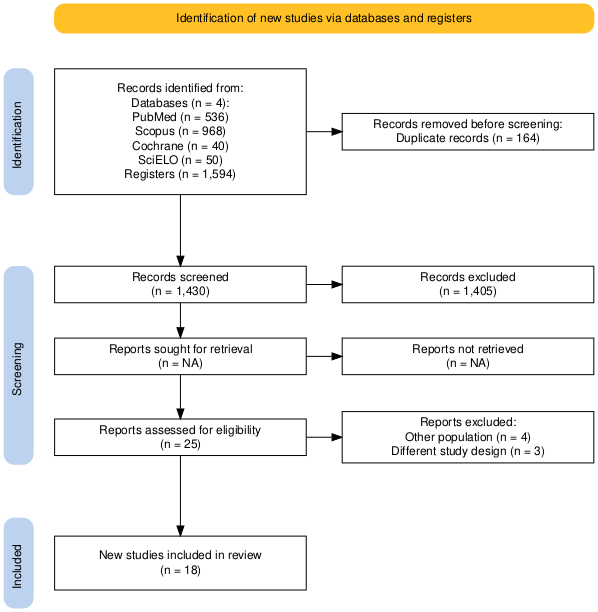
The extracted data were categorized by authorship, year of publication, country, population characteristics, results, and outcomes. The databases searched were MEDLINE via PubMed (n = 536), Scopus (n = 968), Cochrane (n = 40), and SciELO (n = 50), totaling 1,594 publications. After applying the selection criteria, 18 studies were included in this systematic review (Figure 1)
Figure 1 - PRISMA Flow Diagram
Frame 1 - Methodological Quality Assessment and Risk of Bias
|
n° |
Author/ year |
Q1 |
Q2 |
Q3 |
Q4 |
Q5 |
Q6 |
Q7 |
Q8 |
Quality Classification |
|
1 |
De Aragão et al. 201910 |
Y |
Y |
UC |
Y |
Y |
N |
Y |
Y |
Moderate |
|
2 |
Cabrera et al. 201811 |
Y |
Y |
Y |
Y |
Y |
Y |
Y |
Y |
High |
|
3 |
Alkubati et al. 202512 |
Y |
Y |
Y |
Y |
Y |
Y |
Y |
Y |
High |
|
4 |
Myhren et al. 201313 |
Y |
Y |
Y |
Y |
Y |
Y |
Y |
Y |
High |
|
5 |
Cecere et al. 20234 |
Y |
Y |
Y |
Y |
Y |
Y |
Y |
Y |
High |
|
6 |
Gunduz e Ozturk, 202515 |
Y |
Y |
Y |
Y |
Y |
Y |
Y |
Y |
High |
|
7 |
Bartz e Maloney, 198616 |
Y |
Y |
UC |
Y |
Y |
N |
Y |
Y |
Moderate |
|
8 |
De Sousa Veloso et al. 202417 |
Y |
Y |
UC |
Y |
Y |
Y |
Y |
Y |
High |
|
9 |
Nowacka et al. 201818 |
Y |
Y |
UC |
Y |
Y |
Y |
Y |
Y |
High |
|
10 |
Ozden et al.19 |
Y |
Y |
UC |
Y |
Y |
Y |
Y |
Y |
High |
|
11 |
Chen e McMurray,20 |
Y |
Y |
UC |
Y |
Y |
Y |
Y |
Y |
High |
|
12 |
Zhang et al. 201421 |
Y |
Y |
UC |
Y |
Y |
UC |
Y |
Y |
Moderate |
|
13 |
Sok et al. 202022 |
Y |
Y |
Y |
Y |
Y |
Y |
Y |
Y |
High |
|
14 |
Wright et al. 199323 |
Y |
Y |
Y |
Y |
Y |
N |
Y |
Y |
High |
|
15 |
Xie et al. 202024 |
Y |
Y |
Y |
Y |
Y |
N |
Y |
Y |
High |
|
16 |
Yanbei et al. 202325 |
Y |
Y |
UC |
Y |
Y |
N |
Y |
Y |
Moderate |
|
17 |
Yildiz et al. 202326 |
Y |
Y |
UC |
Y |
Y |
N |
Y |
Y |
Moderate |
|
18 |
Yousif e Al-Fayyadh, 202527 |
Y |
Y |
UC |
Y |
Y |
N |
Y |
Y |
Moderate |
In Table 1, different instruments were used to assess Burnout syndrome, with 83% of the studies employing the Maslach Burnout Inventory (MBI). The total sample size of the studies included in this systematic review was 3,964 participants.
Table 1 - Data Extracted from the Studies
|
Author-year/ country |
Study design |
Population |
Assessment Instrument |
Results |
|
De Aragão et al. 201910/ Brasil |
Cross-sectional |
Nurses with a mean age of 42 years (n = 65) ♂♀ |
Maslach Burnout Inventory; Job Content Questionnaire (JCQ) |
There was a prevalence of Burnout syndrome of 53.6%. Only 4.6% were smokers, 50.8% consumed alcoholic beverages, 46.2% did not engage in physical exercise, and 49.2% worked more than 54 hours per week. |
|
Cabrera et al. 201811/ Espanha |
Cross-sectional |
Nurses (n = 56) had a mean age of 29 years, while nursing assistants had a mean age of 39 years (n = 41). ♂♀ |
Maslach
Burnout |
There was a significant difference (p < 0.05) in the emotional exhaustion domain in GE2 (nursing assistants) in the intragroup analysis when comparing professionals working in the ICU with those in outpatient settings. In the domains of emotional exhaustion, professional accomplishment, and depersonalization, nurses presented higher levels than nursing assistants. |
|
Alkubati et al. 202512/ Arabia Saudita |
Cross-sectional and correlational |
Nurses (n = 306) with a mean age of 32 years ♂♀ |
Maslach Burnout inventory |
In the emotional exhaustion domain, 21% of participants were classified as low, 29% as moderate, and 50% as high. In the depersonalization domain, 10% were classified as low, 10% as moderate, and 80% as high. In the personal accomplishment domain, 1% were classified as low, 10% as moderate, and 89% as high. The overall Burnout classification was 46%. |
|
Myhren et al. 201313/ Noruega |
Cross-sectional |
Nurses (n = 129) with age not reported ♂♀ |
Maslach Burnout Inventory, Basic Character Inventory, Job Satisfaction Scale (JSS), and Cooper’s Job Stress Questionnaire (CJSQ). |
No differences were observed between genders or according to experience regarding job satisfaction, job stress, or Burnout scores. Only the personality trait neuroticism (vulnerability) showed a significant difference between genders, with women presenting higher scores compared to men. |
|
Cecere et al. 20234/ Itália |
Cross-sectional |
Nurses (n = 140) aged between 21 and 50 years ♂♀ |
Maslach Burnout Inventory (MBI) |
Higher levels of physical activity, emotional quality, social quality, and work-related quality were associated with lower levels of Burnout. |
|
Gunduz e Ozturk, 202515/ Turquia |
Cross-sectional and correlational |
Nurses (n = 156) aged between 23 and 56 years ♂♀ |
Mental Workload Scale (MWS) e Maslach Burnout Scale (MBI) |
Thirty-one percent of nurses reported high emotional exhaustion, 18% reported high depersonalization, and 46% reported low personal accomplishment. |
|
Bartz e Maloney, 198616/ Arizona |
Cross-sectional and correlational |
Nurses (n = 89), both military and civilian, aged between 25 and 58 years ♂♀ |
Maslach Burnout Inventory (MBI) |
The older the age, the lower the levels of emotional exhaustion and depersonalization. Men exhibited higher levels of emotional exhaustion and depersonalization than women. Military nurses showed higher levels of emotional exhaustion and depersonalization than civilian nurses. Higher educational attainment was associated with greater emotional exhaustion. Longer time in nursing was associated with lower levels of emotional exhaustion and depersonalization. |
|
De Sousa Veloso et al. 202417/ Brasil |
Cross-sectional and analytical |
Nurses (n = 94) with a mean age of 39 years ♂♀ |
Maslach Burnout Inventory e Human Services Survey (MBI e HSS) |
In the emotional exhaustion domain, 9.6% of participants were classified as low, 27.7% as moderate, and 62.8% as high. In the depersonalization domain, 7.4% were classified as low, 27.7% as moderate, and 64.9% as high. In the personal accomplishment domain, 3.2% were classified as low, 19.1% as moderate, and 77.7% as high. |
|
Nowacka et al. 201818/ Polônia |
Cross-sectional and descriptive |
Nurses (n = 560) aged between 27 and 63 years ♂♀ |
Maslach Burnout Inventory (MBI) |
Thirty-four percent of participants presented low levels of emotional exhaustion, 29% moderate, and 37% high. In the depersonalization domain, 54% had high levels, 26% moderate, and 21% low. In the personal accomplishment domain, 64% reported low levels, 23% moderate, and 13% high. |
|
Ozden et al.19/ Turquia |
Cross-sectional and descriptive |
Nurses (n = 138) aged between 22 and 48 years ♂♀ |
Maslach Burnout Inventory (MBI) e Minesota Satisfaction Questionary (MSQ) |
Nurses with four years or less of service showed lower levels of professional accomplishment (p < 0.05) compared to those with five years or more. In the work shift domain, professionals working night shifts exhibited higher emotional exhaustion, greater depersonalization, and lower professional accomplishment (p < 0.05). |
|
Chen e McMurray,20/ Australia |
Cross-sectional and correlational |
Nurses (n = 68) aged between 20 and 49 years, ♂♀ |
Maslach Burnout Inventory (MBI) |
Younger nurses experience higher levels of emotional exhaustion, depersonalization, and personal accomplishment (p < 0.05). |
|
Zhang et al. 201421/ China |
Observational |
Nurses (n = 426) aged between 23 and 28 years ♂♀ |
Maslach Burnout Inventory e Human Services Survey (MBI e HSS) |
Eighty-eight point five percent of the nurses who responded to the questionnaire were female and young, with 16% exhibiting significant levels of emotional exhaustion, depersonalization, and professional accomplishment. Among nurses with longer work experience (5 to 10 years), representing one-quarter of the total, high levels of Burnout were reported. |
|
Sok et al. 202022/ Korea do Sul |
Cross-sectional and descriptive |
Nurses (n = 115) aged between 25 and 40 years ♂♀ |
Copenhagen Burnout Inventory (CBI) |
There was a strong correlation between Burnout, depression, and job stress. Participants aged between 25 and 30 years exhibited higher levels of depression, Burnout, and work-related stress. |
|
Wright et al. 199323/ Estados Unidos |
Quantitative, correlational, and cross-sectional |
Nurses (n = 31) aged between 31 and 37 years ♂♀ |
Hardincss test, Nursing Stress Scale (NSS), Boredom Scale |
No significant relationship was found between stress and Burnout and the demographic variables (age, sex, shift, and specific unit). |
|
Xie et al. 202024/ China |
Descriptive, correlational, and cross-sectional |
Nurses (n = 553) aged between 20 and 36 years |
Maslach Burnout Inventory (MBI), Emotional Intelligence Scale (EIS) |
Mindfulness had an indirect effect on emotional exhaustion (p = 0.006), depersonalization (p = 0.006), and professional accomplishment (p = 0.05). |
|
Yanbei et al. 202325/ China |
Cross-sectional |
Nurses (n = 479) aged between 25 and 35 years |
Maslach Burnout Inventory e Human Services Survey (MBI e HSS) |
Burnout showed a significant relationship with work-related frustration (p < 0.05), and significant differences were also observed (p < 0.05) in the work frustration domain. |
|
Yildiz et al. 202326/ Turquia |
Cross-sectional |
Nurses (n = 164) aged between 22 and 44 years ♂♀ |
Maslach
Burnout Inventory (MBI), Beck Anxiety Inventory (BAI), Beck Depression
Inventory |
Forty-seven point six percent of participants presented high levels of emotional exhaustion, 15.9% high levels of depersonalization, and 67.1% low levels of personal accomplishment. Additionally, 7.9% of nurses exhibited severe depression, and 26.8% severe anxiety. |
|
Yousif e Al-Fayyadh, 202527/ Iraque |
Descriptive and correlational |
Nurses (n = 377) aged between 21 and 60 years ♂♀ |
Burnout Assessment Tool (BAT) |
Seventy percent of participants exhibited normal levels of anxiety, 16.2% moderate, and 9.5% severe. Eighty-four percent presented normal levels of depression, 10.1% moderate, and 5.6% severe. |
DISCUSSION
This systematic review aimed to analyze the incidence of Burnout syndrome among nursing professionals working in intensive care units.
Different tools were used to classify the levels of Burnout syndrome; however, the most frequently used instrument was the MBI. 10–18,20,21,24–26,28 Corroborating this finding 1, it shows that, despite the existence of different versions of the MBI tool, the original version was the most frequently used.1
Burnout syndrome is described as a prolonged reaction to stress in the workplace, characterized by profound physical, mental, and emotional exhaustion, resulting in a reduced sense of both personal and professional accomplishment. 4 In this systematic review, the domains “emotional exhaustion,” “professional accomplishment,” and “depersonalization” were the most frequently used to classify the levels of Burnout syndrome. Another condition analyzed was depression. In the interpretation of these dimensions, emotional exhaustion reflects the feeling of being overloaded and emotionally drained by work. Depersonalization measures emotional distancing and cynicism toward work and others, while personal accomplishment assesses the sense of competence and success at work.
Accordingly, in the emotional exhaustion domain, the study by Cabrera et al. 11 found higher levels among nurses and professionals working in intensive care units. Studies 16,20 analyzed the relationship between participants’ age and emotional exhaustion, showing that younger professionals presented higher levels compared with older ones. Studies 12,17 reported that more than 50% of participants had high levels of emotional exhaustion, whereas studies 15,18,21,26 reported values below 50% in this domain.
In the professional accomplishment domain, studies 12,17,21 showed high classifications. However, studies 15,18,26 reported low classifications in this domain. The age factor was analyzed in studies 20,28, with younger professionals demonstrating higher levels of professional accomplishment.
In the depersonalization domain, studies 12,17,18 reported that more than 50% of respondents presented high levels of depersonalization. Younger individuals and those working night shifts showed higher levels of depersonalization.
CONCLUSION
This study demonstrated a high prevalence of Burnout syndrome among nursing professionals, corroborating previous findings in the literature that identify this group as one of the most vulnerable to physical and emotional exhaustion within healthcare settings. The results indicate that biological factors, such as age and sex, work-related factors—particularly work shift—and chronological aspects, such as length of service, exert a significant influence on the development of this disorder. Younger professionals or those with longer exposure to occupational demands, as well as individuals subjected to extended working hours and night shifts, appear to be more susceptible to Burnout, possibly due to the cumulative effect of physical, emotional, and psychosocial stressors over time.
Thus, nursing working conditions—often characterized by work overload, shortages of human resources, low professional autonomy, and high levels of care-related responsibility—contribute significantly to emotional exhaustion and depersonalization, which are core dimensions of Burnout syndrome. Such factors may compromise not only the mental and physical health of these professionals but also the quality of care provided to patients, thereby negatively affecting health outcomes and patient safety.
In light of this scenario, the implementation of public and institutional policies aimed at promoting the occupational health of nursing professionals is essential. Strategies such as reorganizing work schedules, ensuring adequate staffing levels, providing psychological support, implementing occupational stress prevention programs, and promoting professional recognition may significantly contribute to reducing the prevalence of Burnout. Investing in improved working conditions and quality of life for these professionals is fundamental not only for individual well-being but also for strengthening healthcare systems and ensuring safe, humanized, and effective care for society.
Future studies addressing other variables, such as workplace bullying and remuneration, may help identify potential solutions to reduce the risk of developing this important syndrome, which significantly affects a large proportion of these professionals.
REFERENCES
1. Soares JP, Lopes RH, Mendonça PBDS, et al. Use of the Maslach Burnout Inventory Among Public Health Care Professionals: Scoping Review. JMIR Ment Health 2023;10:e44195; doi: 10.2196/44195.
2. Cohen C, Pignata S, Bezak E, et al. Workplace interventions to improve well-being and reduce burnout for nurses, physicians and allied healthcare professionals: a systematic review. BMJ Open 2023;13(6):e071203; doi: 10.1136/bmjopen-2022-071203.
3. Ramírez-Elvira S, Romero-Béjar JL, Suleiman-Martos N, et al. Prevalence, Risk Factors and Burnout Levels in Intensive Care Unit Nurses: A Systematic Review and Meta-Analysis. Int J Environ Res Public Health 2021;18(21); doi: 10.3390/ijerph182111432.
4. Maresca G, Corallo F, Catanese G, et al. Coping Strategies of Healthcare Professionals with Burnout Syndrome: A Systematic Review. Medicina 2022;58(2):327; doi: 10.3390/medicina58020327.
5. Chen C, Meier ST. Burnout and depression in nurses: A systematic review and meta-analysis. International Journal of Nursing Studies 2021;124:104099; doi: 10.1016/j.ijnurstu.2021.104099.
6. Stutting HL. The Relationship Between Rest Breaks and Professional Burnout Among Nurses. Critical Care Nurse 2023;43(6):48–56; doi: 10.4037/ccn2023177.
7. Haddaway NR, Page MJ, Pritchard CC, et al. PRISMA2020 : An R package and Shiny app for producing PRISMA 2020‐compliant flow diagrams, with interactivity for optimised digital transparency and Open Synthesis. Campbell Systematic Reviews 2022;18(2):e1230; doi: 10.1002/cl2.1230.
8. Methley AM, Campbell S, Chew-Graham C, et al. PICO, PICOS and SPIDER: a comparison study of specificity and sensitivity in three search tools for qualitative systematic reviews. BMC Health Serv Res 2014;14(1):579; doi: 10.1186/s12913-014-0579-0.
9. Barker TH, Habibi N, Aromataris E, et al. The revised JBI critical appraisal tool for the assessment of risk of bias for quasi-experimental studies. JBI Evidence Synthesis 2024;22(3):378–388; doi: 10.11124/JBIES-23-00268.
10. De Aragão NSC, Barbosa GB, Sobrinho CLN. Burnout syndrome and associated factors in intensivist nurses: A systematic review. Revista Baiana de Enfermagem 2019;33; doi: 10.18471/rbe.v33.28605.
11. Cabrera D, Cabello-Verrugio C, Solís N, et al. Somatotropic Axis Dysfunction in Non-Alcoholic Fatty Liver Disease: Beneficial Hepatic and Systemic Effects of Hormone Supplementation. Int J Mol Sci 2018;19(5); doi: 10.3390/ijms19051339.
12. Alkubati SA, Alsaqri SH, Alrubaiee GG, et al. The influence of anxiety and depression on critical care nurses’ performance: A multicenter correlational study. Australian Critical Care 2025;38(1); doi: 10.1016/j.aucc.2024.04.008.
13. Myhren H, Ekeberg O, Stokland O. Job satisfaction and burnout among intensive care unit nurses and physicians. Critical Care Research and Practice 2013;2013; doi: 10.1155/2013/786176.
14. Cecere L, de Novellis S, Gravante A, et al. Quality of life of critical care nurses and impact on anxiety, depression, stress, burnout and sleep quality: A cross-sectional study. Intensive and Critical Care Nursing 2023;79; doi: 10.1016/j.iccn.2023.103494.
15. Gündüz ES, Öztürk NK. Mental workload as a predictor of burnout in intensive care nurses. Nurs Crit Care 2025;30(2):e13173; doi: 10.1111/nicc.13173.
16. Bartz C, Maloney JP. Burnout among intensive care nurses. Res Nurs Health 1986;9(2):147–53; doi: 10.1002/nur.4770090210.
17. de Souza Veloso AT, e Silva DDS, da Silva VA, et al. Burnout syndrome and associated factors in intensive care nurses: a cross-sectional study. Enfermeria Global 2024;23(2):248–259; doi: 10.6018/EGLOBAL.577341.
18. Nowacka A, Piskorz A, Wolfshaut-Wolak R, et al. Selected socio-demographic and occupational factors of burnout syndrome in nurses employed in medical facilities in małopolska—preliminary results. INTERNATIONAL JOURNAL OF ENVIRONMENTAL RESEARCH AND PUBLIC HEALTH 2018;15(10); doi: 10.3390/ijerph15102083.
19. Özden D, Karagözoğlu Ş, Yildirim G. Intensive care nurses’ perception of futility: job satisfaction and burnout dimensions. Nurs Ethics 2013;20(4):436–47; doi: 10.1177/0969733012466002.
20. Chen SM, McMurray A. “Burnout” in intensive care nurses. J Nurs Res 2001;9(5):152–64; doi: 10.1097/01.jnr.0000347573.45553.e0.
21. Zhang XC, Huang DS, Guan P. Job burnout among critical care nurses from 14 adult intensive care units in northeastern China: A cross-sectional survey. BMJ Open 2014;4(6); doi: 10.1136/bmjopen-2014-004813.
22. Sok S, Sim H, Han B, et al. Burnout and Related Factors of Nurses Caring for DNR Patients in Intensive Care Units, South Korea. Int J Environ Res Public Health 2020;17(23); doi: 10.3390/ijerph17238899.
23. Wright TF, Blache CF, Ralph J, et al. Hardiness, stress, and burnout among intensive care nurses. J Burn Care Rehabil 1993;14(3):376–81; doi: 10.1097/00004630-199305000-00013.
24. Xie C, Zeng Y, Lv Y, et al. Educational intervention versus mindfulness-based intervention for ICU nurses with occupational burnout: a parallel, controlled trial. Complementary Therapies in Medicine 2020;52:102485; doi: 10.1016/j.ctim.2020.102485.
25. Yanbei R, Dongdong M, Yun L, et al. Does perceived organization support moderates the relationships between work frustration and burnout among intensive care unit nurses? A cross-sectional survey. BMC Nursing 2023;22(1); doi: 10.1186/s12912-023-01180-5.
26. Yıldız E. Psychopathological Factors Associated With Burnout in Intensive Care Nurses: A Cross-Sectional Study. Journal of the American Psychiatric Nurses Association 2023;29(2):122–135; doi: 10.1177/1078390321999725.
27. Yousif SY, Al-Fayyadh S. Burnout among nurses practicing in critical care units: Predicting the contributing factors. J Educ Health Promot 2025;14:38; doi: 10.4103/jehp.jehp_926_24.
28. Ozden F, Ozkeskin M, Ezgin B, et al. Telerehabilitation-based training to improve balance confidence, falls efficacy, functional independence in individuals with stroke: a randomized controlled trial. Neurology Asia 2024;29(2):341‐349; doi: 10.54029/2024npu.
Funding and Acknowledgments:
There was no funding source for this study.
Authorship Criteria (Authors' Contributions)
Diego Gama Linhares; Veronica de Souza Manhães: Conceptualization
Diego Gama Linhares; David da Mata Ferreira Fidelis: Data Curation
Maria Luísa Caldas Barboza de Oliveira: Formal Analysis; Fundraising
Veronica de Souza Manhães; Diego Gama Linhares: Investigation
Rodrigo Gomes de Souza Vale; Millena de Oliveira Lima: Methodology
Alessandro Barbosa de Oliveira: Project Management
Pedro Quintanilha Pinto; Letícia Aguiar da Silveira: Resources
Diego Gama Linhares: Software
Rodrigo Gomes de Souza Vale: Supervision
Diego Gama Linhares: Validation
Veronica de Souza Manhães; Diego Gama Linhares: Visualization; Papers/Drafting - original draft
Rodrigo Gomes de Souza Vale: Writing - revision and editing
Declaration of conflict of interest
Nothing to declare
Scientific Editor: Ítalo Arão Pereira Ribeiro. Orcid: https://orcid.org/0000-0003-0778-1447
Rev Enferm Atual In Derme 2026;100(1): e026021
 Atribuição
CCBY
Atribuição
CCBY