REVIEW ARTICLE
FETAL MORTALITY IN BRAZIL: CHANGES OVER TIME AND REGIONAL DISPARITIES
MORTALIDADE FETAL NO BRASIL: EVOLUÇÃO TEMPORAL E DISPARIDADES REGIONAIS
MORTALIDAD FETAL EN BRASIL: EVOLUCIÓN A LO LARGO DEL TIEMPO Y DISPARIDADES REGIONALES
https://doi.org/10.31011/reaid-2026-v.100-n.3-art.2793
1Ana Beatriz Norberto Nunes Bezerra
2Alzira Maria Nunes Soares Bezerra
3Andreza da Silva Fontinele
4Yone Mara Rocha Santos e Silva
5Gabrielly Soares Silva Bezerra
6José Francisco Ribeiro
7Amanda Lucia Barreto Dantas
8Verbênia Cipriano Feitosa Silva
1Enfermeira Obstétrica, Universidade Federal do Piauí, Teresina, Piauí, Brazil. ORCID: https://orcid.org/0000-0002-3478-7062
2Estudante de Enfermagem, Universidade Estadual do Piauí, Teresina, Piauí, Brazil. ORCID: https://orcid.org/0009-0006-4010-3137
3Mestranda em Enfermagem, Universidade Federal do Piauí, Teresina, Piauí, Brazil. ORCID: https://orcid.org/0000-0002-3239-357X
4Enfermeira, Universidade Federal do Piauí, Teresina, Piauí, Brazil. ORCID: https://orcid.org/0000-0003-2820-0349
5Enfermeira Obstétrica, Universidade Federal do Piauí, Teresina, Piauí, Brasil. ORCID: https://orcid.org/0000-0003-0498-4193
6Doutorado em enfermagem, Universidade Estadual do Piauí, Teresina, Piauí, Brazil. ORCID: https://orcid.org/0000-0003-3133-0101
7Doutorado em enfermagem, Universidade Estadual do Piauí, Teresina, Piauí, Brazil. ORCID: https://orcid.org/0000-0003-1028-1451
8Doutoranda em Enfermagem, Universidade Federal do Piauí, Teresina, Piauí, Brazil. ORCID: https://orcid.org/0000-0002-1527-6275
Corresponding Author
Ana Beatriz Norberto Nunes Bezerra
Cep: 64030-140, Quadra 59 casa11, bairro bela vista. Brazil. E-mail: anabeatriznunes08@hotmail.com.
Submission: 30-04-2026
Approval: 17-07-2026
ABSTRACT
Introduction: Fetal mortality is an important indicator of the quality of maternal and child care, reflecting both clinical and obstetric conditions as well as structural inequalities in access to and the effectiveness of health services. Objective: To analyze trends in fetal deaths in Brazil from 2013 to 2024. Method: A retrospective, quantitative, ecological study using data from the Mortality Information System (SIM) and the Live Birth Information System (SINASC), available from the Department of Information Technology of the Unified Health System (DATASUS). Fetal Mortality Rates (FMR) were calculated per 1,000 total births, and the trend was analyzed using the Joinpoint Regression model, with an estimate of the Annual Percentage Change (APC). Results: A total of 306,418 fetal deaths and 33,367,549 live births were recorded, with a predominance among women aged 20 to 29 years (40.98%) and those with 8 to 11 years of schooling (42.28%). The highest proportion of deaths occurred between 32 and 36 weeks of gestation (27.74%) and among male infants (52.33%). Perinatal conditions accounted for 92.31% of the causes of death. The Northern region exhibited complex behavior and was characterized by a stationary trend. The Northeast, South, and Southeast regions showed APCs ranging from –1.24% to –2.01%. In turn, the Central-West region showed a stable trend (APC = 0.27%; 95% CI: –1.0 to 0.4; p = 0.392). Conclusion: Nursing plays a valuable role in the prevention of fetal deaths and in the quality of maternal and child health promotion and prevention, contributing to the continued reduction of fetal mortality in the country. This study may provide relevant evidence to inform the framework for future research.
Keywords: Health Care Disparities; Stillbirth; Maternal and Child Health; Epidemiology.
RESUMO
Introdução: A mortalidade fetal constitui um importante indicador da qualidade da atenção materno-infantil, refletindo tanto condições clínicas e obstétricas quanto desigualdades estruturais no acesso e na efetividade dos serviços de saúde. Objetivo: Analisar a tendência dos óbitos fetais no Brasil no período de 2013 a 2024. Método: Estudo ecológico, retrospectivo e quantitativo, com dados do Sistema de Informações sobre Mortalidade (SIM) e do Sistema de Informações sobre Nascidos Vivos (SINASC), disponíveis no Departamento de Informática do Sistema Único de Saúde (DATASUS). As Taxas de Mortalidade Fetal (TMF) foram calculadas por 1.000 nascimentos totais, e a tendência analisada por meio do modelo Joinpoint Regression, com estimativa da Variação Percentual Anual (APC). Resultados: Registraram-se 306.418 óbitos fetais e 33.367.549 nascidos vivos, predominância em mulheres de 20 a 29 anos (40,98%) e escolaridade entre 8 e 11 anos (42,28%). A maior proporção de óbitos ocorreu entre 32 e 36 semanas (27,74%) e no sexo masculino (52,33%). As afecções perinatais responderam por 92,31% das causas de óbito. A região Norte, apresentou comportamento complexo e caracterizou-se por tendência estacionária. As regiões Nordeste, Sul e Sudeste apresentaram APC com variação entre –1,24% –2,01%. Por sua vez, a região Centro-Oeste apresentou tendência estacionária (APC = 0,27%; IC95%: –1,0 a 0,4; p = 0,392). Conclusão: A enfermagem assume um papel valioso na prevenção de óbitos fetais e na qualidade da promoção/prevenção da saúde materno-infantil, contribuindo para a redução contínua da mortalidade fetal no país. O estudo pode subsidiar evidências relevantes para o arcabouço de pesquisas futuras.
Palavras-chave: Disparidades em Assistência à Saúde; Natimorto; Saúde Materno-Infantil; Epidemiologia.
RESUMEN
Introducción: La mortalidad fetal constituye un indicador importante de la calidad de la atención materno-infantil, ya que refleja tanto las condiciones clínicas y obstétricas como las desigualdades estructurales en el acceso y la eficacia de los servicios sanitarios. Objetivo: Analizar la tendencia de las muertes fetales en Brasil durante el periodo comprendido entre 2013 y 2024. Método: Estudio ecológico, retrospectivo y cuantitativo, con datos del Sistema de Información sobre Mortalidad (SIM) y del Sistema de Información sobre Nacidos Vivos (SINASC), disponibles en el Departamento de Informática del Sistema Único de Salud (DATASUS). Las tasas de mortalidad fetal (TMF) se calcularon por cada 1 000 nacimientos totales, y la tendencia se analizó mediante el modelo de regresión Joinpoint, con una estimación de la variación porcentual anual (APC). Resultados: Se registraron 306 418 muertes fetales y 33 367 549 nacidos vivos, con predominio en mujeres de entre 20 y 29 años (40,98 %) y con un nivel de escolarización de entre 8 y 11 años (42,28 %). La mayor proporción de muertes se produjo entre las semanas 32 y 36 (27,74 %) y en el sexo masculino (52,33 %). Las afecciones perinatales representaron el 92,31 % de las causas de muerte. La región del Norte presentó un comportamiento complejo y se caracterizó por una tendencia estacionaria. Las regiones del Noreste, Sur y Sudeste presentaron una tasa de variación anual (APC) con una variación entre el –1,24 % y el –2,01 %. Por su parte, la región Centro-Oeste mostró una tendencia estacionaria (APC = 0,27 %; IC del 95 %: –1,0 a 0,4; p = 0,392). Conclusión: La enfermería desempeña un papel valioso en la prevención de las muertes fetales y en la calidad de la promoción y prevención de la salud materno-infantil, contribuyendo a la reducción continua de la mortalidad fetal en el país. El estudio puede aportar pruebas relevantes para el marco de futuras investigaciones.
Palabras clave: Disparidades en la Atención Sanitaria; Mortinatalidad; Salud Materno-Infantil; Epidemiología.
INTRODUCTION
Pregnancy is a physiological process marked by profound biological, emotional, and social transformations in a woman's life, requiring adaptations that impact daily family and community life. In most cases, it progresses healthily; however, even with adequate prenatal care, adverse events compromising maternal and fetal well-being can occur(1-2). Among these events, fetal death stands out as one of the most severe pregnancy outcomes and a key indicator of the quality of maternal and child health care.
The World Health Organization (WHO) defines fetal death as the death of the product of conception prior to its complete expulsion or extraction from the mother's body; for statistical purposes, this includes deaths occurring from the 22nd week of gestation onwards, involving a weight of ≥500 g or a fetal length of ≥25 cm, in accordance with the criteria of the International Classification of Diseases, 10th Revision (ICD-10)(3). The Fetal Mortality Rate (FMR) is widely used as a metric to evaluate the quality of prenatal and childbirth care, as well as the population's socioeconomic and structural conditions(4).
Low maternal education, skin color particularly among Black or mixed-race women and poor socioeconomic conditions are directly linked to higher fetal mortality rates. Poverty, combined with a lack of access to basic services such as sanitation, adequate nutrition, and decent housing, limits opportunities for appropriate prenatal care and heightens the risk of pregnancy complications(5-6).
Among the leading causes of fetal death, those of maternal etiology are particularly significant; these can be classified into pre-existing conditions such as obesity, substance use, and poorly controlled chronic diseases and specific obstetric complications, such as hypertensive disorders of pregnancy, gestational diabetes mellitus, and untreated infections. Furthermore, placental complications play a significant role, including issues such as retroplacental hematoma, placental insufficiency, and umbilical cord abnormalities such as stenosis or true knots(7).
Globally, an estimated 2.6 million stillbirths occur annually, the majority of which are preventable through timely and appropriate prenatal and intrapartum interventions. Despite their magnitude, stillbirths remain overlooked compared to other indicators such as maternal and infant mortality receiving less political and scientific investment(8-9). This lack of visibility is also reflected in the international agenda: although included in strategic initiatives by the WHO and UNICEF, stillbirths are not addressed as a specific target within the Sustainable Development Goals (SDGs)(4).
In Brazil, the stillbirth rate fell by 25.2% between 1996 and 2019, dropping from 13.5 to 10.1 per 1,000 births. However, marked regional inequalities persist; the highest rates are concentrated in the Northeast, exceeding the national average(10). These disparities reflect social determinants, unequal access to health services, the inconsistent quality of prenatal and childbirth care, and shortcomings in surveillance systems(11).
The persistence of preventable stillbirths points to limitations in care models and underscores the need for epidemiological analyses capable of identifying temporal and spatial patterns to inform surveillance efforts and public policies. In this context, ecological studies utilizing secondary databases such as the Mortality Information System (SIM) and the Live Birth Information System (SINASC), available through the Unified Health System's Department of Informatics (DATASUS)enable the assessment of the distribution, trends, and potential factors associated with fetal mortality across different regions of the country, as well as the identification of inequalities and priority areas. Given the foregoing, the objective of this study was to analyze the trend of fetal deaths in Brazil from 2013 to 2024.
METHOD
This is an ecological, retrospective study with a quantitative approach, based on secondary data from official health information systems. Ecological studies use geographic, population or administrative units as a level of analysis, allowing the identification of patterns, variations and trends in health events over time. In the present study, aggregated information regarding fetal deaths registered in Brazil from 2013 to 2024 was analyzed.
Secondary data were used relating to records of fetal deaths with Gestational Age (GA) ≥ 22 weeks from SIM, made available by DATASUS of the Ministry of Health (MS), as well as data from SINASC obtained through TabNet. The information was based on national secondary data, comprising the Brazilian territory and its five macro-regions (North, Northeast, Southeast, South and Center-West), according to data availability in DATASUS(12).
Data extraction for the present study was carried out in November 2025. The data was organized in Microsoft Excel spreadsheets, in which the consolidation, standardization of variables and calculation of the MMR per 1,000 total births were carried out.
For data analysis, a process conducted in multiple stages was adopted, initially contemplating a descriptive approach and, subsequently, a temporal analysis, appropriate to the ecological design of the research. The descriptive stage included the characterization of maternal and fetal variables, with the calculation of absolute and relative frequencies. The age distribution of mothers, education, type of birth and other variables available in SIM were described. For fetal characteristics, gestational weeks, birth weight, sex and underlying cause of death were considered according to the ICD-10 chapters.
Subsequently, a temporal analysis of trends between 2013 and 2024 was carried out, using the Joinpoint Regression model, widely used in time series studies as it allows inflection points to be identified throughout the historical series. For each identified time segment, the Annual Percentage Variation (APC) and their respective 95% confidence intervals (95%CI) were calculated, in addition to the p value, which determines statistical significance. Trends were classified as increasing, decreasing or stationary, depending on the direction and significance of the coefficients. A significant trend was considered when p < 0.05 and the 95% CI did not include the value zero. Variables with low completeness were used only in a descriptive way.
As it is an ecological study, based exclusively on secondary data, in the public domain and without any possibility of individual identification, this research is exempt from consideration by the Research Ethics Committee (CEP), in accordance with Brazilian regulations that regulate studies that do not directly involve human beings, in accordance with Resolution of the National Health Council (CNS) nº 466/2012(13), as well as the research is in accordance with Resolution nº 510/2026, as it is exclusively of publicly accessible data, without identifying the participants. In this way, there is no risk or harm to the privacy, confidentiality or dignity of individuals, and it is not necessary to obtain an Informed Consent Form (TCLE).
RESULTS
Between 2013 and 2024, 306,418 fetal deaths were recorded in Brazil, alongside a total of 33,367,549 live births during the same period. Table 1 presents the sociodemographic characteristics of the mothers. The 20–29 age group predominated (40.98%), followed by the 30–39 age group (30.12%). Regarding education level, 42.28% of mothers had 8 to 11 years of schooling, while 25.61% had 1 to 7 years. The race/color variable showed a high percentage of missing data (99.84%), compromising comparative analyses for this stratum. Regarding the type of delivery, vaginal delivery was the most common (63.37%) among the recorded fetal deaths.
Table 1 – Distribution of maternal variables, Brazil, 2013–2024.
|
Variables |
N (=306.418) |
% |
|
Age |
||
|
<10 to 19 years |
47.114 |
15,38% |
|
20 to 29 years |
125.568 |
40,98% |
|
30 to 39 years |
92.286 |
30,12% |
|
>40 years |
16.531 |
5,39% |
|
Ignored |
24.919 |
8,13% |
|
Mother's education (years of schooling) |
||
|
None |
9.711 |
3,17% |
|
1to 7 years |
78.477 |
25,61% |
|
8 to 11 years |
129.554 |
42,28% |
|
>12 years |
31.733 |
10,36% |
|
Ignored |
56.943 |
18,58% |
|
Race/color |
||
|
White |
27 |
0,009% |
|
Black |
4 |
0,001% |
|
Brown |
44 |
0,014% |
|
Indigenous |
402 |
0,131% |
|
Ignored |
305.941 |
99,84% |
|
Type of delivery |
||
|
Vaginal |
194.173 |
63,37% |
|
Cesarean |
99.458 |
32,46% |
|
Ignored |
12.787 |
4,17% |
Legend: N=number of observations analyzed, and % = relative frequency of the categories.
Source: Research data (2025).
Table 2 presents the fetal characteristics. The highest proportion of deaths occurred between 32 and 36 weeks of gestation (27.74%), followed by the 37 to 41 weeks of gestation range (24.34%). Regarding birth weight, fetuses weighing between 1,500 and 2,499 g predominated (26.25%), followed by those weighing 500 to 999 g (24.45%). Males accounted for 52.33% of the deaths. The majority of deaths were classified under Chapter XVI of the ICD-10 (92.31%), which covers certain conditions originating in the perinatal period.
Table 2 – Variables related to fetal death, Brazil, 2013 to 2024.
|
Variables |
N (=306.418) |
% |
|
Weeks of pregnancy |
||
|
22 to 27 weeks |
62.304 |
20,33% |
|
28 to 31 weeks |
54.962 |
17,94% |
|
32 to 36 weeks |
85.014 |
27,74% |
|
37 to 41 weeks |
74.567 |
24,34% |
|
>42 weeks |
1.563 |
0,51% |
|
Ignored |
28.008 |
9,14% |
|
Birth weight |
||
|
500 to 999g |
74.926 |
24,45% |
|
1000 to 1499g |
48.381 |
15,79% |
|
1500 to 2499g |
80.439 |
26,25% |
|
2500 to 2999 |
34.232 |
11,17% |
|
3000 to 3999g |
38.228 |
12,48% |
|
>4000g |
8.355 |
2,73% |
|
Ignored |
21.857 |
7,13% |
|
Gender |
||
|
Male |
160.346 |
52,33% |
|
Female |
139.598 |
45,56% |
|
Ignored |
6.474 |
2,11% |
|
Chapter CID-10 |
||
|
Chap I |
4.688 |
1,53% |
|
Chap XVI |
282.853 |
92,31% |
|
Cap XVII |
18.876 |
6,16% |
|
Chap XVIII |
1 |
0% |
Legend: N= number of observations analyzed, and % = relative frequency of the categories.
Source: Research data (2025).
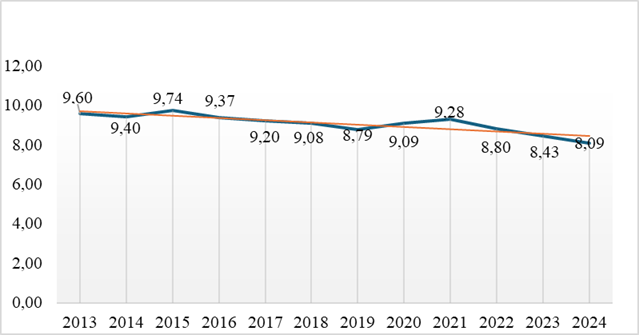
Graph 1 presents the consolidated data on fetal deaths and live births, used to calculate the Fetal Mortality Rate (FMR) for Brazil from 2013 to 2024. The FMR ranged from 9.74 per 1,000 births (in 2015) to 8.09 per 1,000 births (in 2024), representing a slight fluctuation over the historical series.
Graph 1 – Fetal Mortality Rate in Brazil, 2013 to 2024.
Source: Research data (2025).
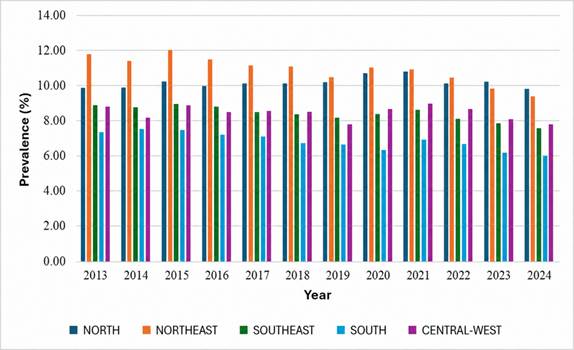
An analysis of the regional distribution revealed that all macro-regions showed a reduction in rates by the end of 2024, albeit with distinct patterns over the period, as shown in Graph 2. In the early years of the series, the North region recorded the highest rates. Nevertheless, all regions exhibited a downward trend in the final year analyzed.
Graph 2 – Distribution of the fetal mortality rate by region in Brazil, 2013–2024.
Source: Research data (2025).
The temporal analysis of fetal deaths in Brazil between 2013 and 2024 (Table 3), conducted using the Joinpoint Regression model, revealed distinct trends across the country's regions. At the national level, a significant downward trend was observed (APC = –1.24%; 95% CI: –1.7 to –0.7; p < 0.001), indicating a consistent reduction in fetal deaths over the years. This result may be linked to advances in prenatal care, death surveillance strategies, and expanded access to health services.
Distinct patterns were observed across Brazilian regions. The North region exhibited a complex pattern between 2013 and 2018, characterized by a stationary trend, followed by a reduction during the 2021–2024 period. The Northeast, South, and Southeast regions showed APC values ranging from –1.24% to –2.01%, suggesting continuous improvements in health indicators. In contrast, the Central-West region displayed a stationary trend (APC = 0.27%; 95% CI: –1.0 to 0.4; p = 0.392), with no statistically significant variation throughout the analyzed period.
Table 3 – Percentage change in fetal deaths in Brazil, 2013 to 2024
|
Location |
Period |
APC (IC 95%*) |
Value of P |
Tendence |
|
Brazil |
2013-2024 |
-1,24 (- 1,7 – -0,7) |
<0,001 |
Decreasing |
|
North |
2013-2018 |
0,33 (-0,6 – 1,2) |
0,362 |
Stacionária |
|
|
2018-2021 |
2,08 (-3,6 – 8,1) |
0,377 |
Estacionária |
|
|
2021-2024 |
-2,87 (-5,3 – -0,4) |
0,033 |
Decrescente |
|
Northeast |
2013-2024 |
-1,79* (-2,3 – -1,3) |
<0,001 |
Decrescente |
|
Southeast |
2013-2024 |
-1,24* (-1,8 – -0,7) |
0,001 |
Decrescente |
|
South |
2013-2024 |
-2,01* (- 2,5 – -1,5) |
<0,001 |
Decrescente |
|
Central-West |
2013-2024 |
0,27 (-1,0 – 0,4) |
0,392 |
Estacionária |
Legend: *p<0,05; APC =Annual Percentage Change; 95% CI = 95% Confidence Interval.
Source: Prepared by the authors (2026).
DISCUSSION
This study aimed to analyze the trend of fetal deaths in Brazil using secondary data from DATASUS covering the period from 2013 to 2024. The analysis revealed a declining national trend, with an Annual Percentage Change (APC) of -1.24%, suggesting improvements in prenatal care. However, the distinct patterns observed across macro-regions demonstrate that the occurrence of fetal deaths varies by region, underscoring the need for regional analyses to understand the complexity of the phenomenon.
Regarding maternal and fetal characteristics, a predominance of mothers aged 20 to 29 was observed; this aligns with a study conducted in Juiz de Fora, where 36.7% of fetal deaths occurred within this same age group(14). Although this age group is considered low-risk from an obstetric standpoint, the finding may be explained by the fact that it corresponds to the period of peak female fertility. Conversely, the age group of 35 years and older also warrants attention; according to the literature, advanced maternal age is increasingly associated with a higher prevalence of chronic diseases, placental abnormalities, and obstetric complications(15).
In this context, an upward trend was observed in the number of pregnant women aged 35 or older, highlighting the need for more rigorous prenatal care for this group. This includes intensified monitoring of risk factors, systematic screening for comorbidities, timely family planning, and appropriate management of hypertension and gestational diabetes(16).
Maternal education levels predominantly fell within the 8-to-11-year range. This finding corroborates studies linking lower levels of education to reduced access to and poorer quality of prenatal care, as well as a higher incidence of adolescent and unplanned pregnancies. This scenario is exacerbated by a lack of effective sex education, unfavorable socioeconomic conditions, poverty, and additional vulnerabilities such as sexual violence, peer pressure, low self-esteem, and substance use(17).
Regarding the mode of delivery in cases of fetal death, the vaginal route predominated (63.37%). A similar study conducted between 2010 and 2018 revealed that vaginal delivery accounted for 66.1% of cases(18). This result demonstrates that vaginal delivery remained the preferred method in cases of fetal death due to the lower risk to maternal health. However, cesarean section is indicated in cases of abnormal presentation, complications related to hypertensive syndromes, or other conditions.
Regarding the fetal profile, it was observed that the majority of fetal deaths occurred between 32 and 36 weeks of gestation, indicating higher mortality among preterm fetuses. This finding aligns with literature identifying prematurity as a major factor associated with fetal death, as demonstrated in a study(19) that identified a higher frequency of fetal deaths at gestational ages between 22 and 36 weeks.
The predominance of males among fetal deaths (52.33%) corroborates other studies addressing male biological vulnerability; these suggest that the maternal immune response to the H-Y histocompatibility antigen and the greater sensitivity of males to corticosteroids released during stress may contribute to this outcome(20).
Regarding the cause of fetal death, the study identified four thematic areas based on ICD-10 classifications, with Chapter XVI accounting for 92.31% of the recorded cases. This category encompasses conditions originating in the perinatal period such as intrauterine hypoxia, fetal distress, and prematurity that directly affect the fetus. Furthermore, prematurity was a factor in over 50% of the recorded fetal deaths, reinforcing this finding(21).
Brazil saw a reduction in the fetal mortality rate (FMR) from 9.60 to 8.09 per 1,000 births, with an Annual Percentage Change (APC) of -1.24%. This result may be attributed to ongoing improvements in public health, expanded access to prenatal care, the implementation of public policies focused on maternal and child health, and initiatives such as the National Policy for Comprehensive Women's Health Care (PNAISM) and programs like Rede Alyne, which aim to address existing healthcare gaps(4-22).
Despite this national decline, high-income countries such as Croatia and the United States have experienced even greater reductions in FMR, with rates dropping to 3.8 and 5.7 per 1,000 births, respectively. These results indicate that, while Brazil has achieved a reduction in FMR, further advancements in maternal-fetal care are still needed(23). An analysis across Brazil's five regions revealed that the reduction is not uniform; it is important to highlight that health outcomes are shaped by determinants such as income, education, transportation, and housing. Given Brazil's vast size, socioeconomic inequality is unevenly distributed concentrated most heavily in the North region. This aligns with the study's findings, which show the North region exhibiting a complex, stationary trend during the initial years of the study, with a reduction occurring only in the post-pandemic period(24).
Persistent structural difficulties such as vast geographic distances, unequal distribution of obstetric services, logistical challenges, and heightened social vulnerability negatively impact the prevention and proper management of fetal and maternal conditions(25). These findings corroborate those observed in the Center-West and North regions, which maintained a stationary trend(26).
The Northeast, Southeast, and South regions showed downward trends, likely linked to the strengthening of the healthcare network, primary care, and maternal-fetal health services. A study conducted in the Northeast region concluded that there was growth and strengthening of Primary Health Care (PHC), alongside improvements in social indicators such as sanitation, waste collection, access to piped water, and aging rates which consequently improved health quality and influenced pregnancy outcomes(27).
Given this scenario, it is evident that challenges faced during prenatal care can directly affect maternal and infant outcomes. Sociodemographic factors including age, income, housing, marital status, and education level influence access to quality care. Notably, these conditions are associated with limited access to information regarding disease prevention and health promotion practices(28). Furthermore, many women live in conditions with inadequate basic sanitation, a factor that increases the risk of infections during pregnancy and may contribute to adverse outcomes(29).
In this context, it is essential to strengthen public policies that reduce social inequalities and improve the quality of maternal-fetal care. Prenatal care is recognized as a key public health intervention for improving maternal and neonatal outcomes. Health promotion activities are of paramount importance in this process and align with SDG 3, which aims to ensure healthy lives and promote well-being. Thus, early engagement of pregnant women, appropriate prenatal monitoring, and effective communication between primary health care (PHC) and the broader care network facilitate the early identification of risk factors and the development of timely interventions. Consequently, health policies that enhance the management of these conditions are fundamental to mitigating associated risks and ensuring adequate care during pregnancy(4-30).
Given the above, the role of the nurse stands out as strategic in improving the quality of prenatal care. These professionals provide high-quality care encompassing nursing consultations, vaccination, nutritional support, health education, and the early identification of potential complications thereby contributing to the continuous monitoring of the pregnancy and the implementation of timely interventions(31).
CONCLUSION
Based on the results presented, it is concluded that, despite the progress made in reducing fetal deaths in Brazil in recent years, significant challenges remain in ensuring equitable, timely, and high-quality prenatal and obstetric care across all regions of the country. The study's findings indicate that regional inequalities may be linked not only to structural differences such as the availability and quality of health services but also to the social determinants that unequivocally shape reproductive outcomes.
Therefore, there is a need to strengthen prenatal care and fetal death surveillance through strategies specifically targeted at the most vulnerable areas; to expand access to effective obstetric services, particularly in regions showing stagnant trends; to improve the quality of health information by ensuring greater record accuracy and enhancing decision-making processes; and to implement intersectoral actions capable of mitigating social inequalities and their direct impact on maternal and child health.
Regarding limitations, it should be noted that, as the study relies on secondary data from a health information system, it is subject to weaknesses inherent in this type of design such as underreporting, incomplete data, and inadequate completion of notification forms factors that can compromise record quality and lead to an underestimation of relevant information regarding fetal deaths. Despite these limitations, the study provides valuable evidence on fetal death trends in Brazil, contributing to the body of future research in the scientific literature.
Thus, this study contributes to an understanding of fetal mortality dynamics in Brazil and offers information to guide public policy planning and the strengthening of maternal and child health care networks. In the field of nursing, the findings reinforce the importance of the nurse's role in primary care and prenatal assistance specifically through the early identification of pregnant women, stratification of pregnancy risk, health education, early detection of risk factors, and care coordination. Thus, nursing plays a valuable role in preventing fetal deaths and in the quality of maternal and child health promotion and prevention, contributing to the continued reduction of fetal mortality in the country.
REFERENCES
1. Alves TV, Bezerra MMM. Principais alterações fisiológicas e psicológicas durante o período gestacional. IDonline. 2020;14(49):114-26. doi: https://doi.org/10.14295/idonline.v14i49.2324
2. Blount AJ, Adams CR, Anderson-Berry AL, Hanson C, Schneider K, Pendyala G, et al. Biopsychosocial factors during the perinatal period: risks, preventative factors, and implications for healthcare professionals. Int J Environ Res Public Health. 2021;18(15):8206. doi:10.3390/ijerph18158206
3. Kumow A. Tendência temporal e características epidemiológicas dos óbitos fetais no município de São Paulo, 2007-2023 [dissertação]. São Paulo: Universidade de São Paulo; 2025.
4. Rocha JBF, Bezerra IMP, Oliveira EKS, Sena ABE, Leitão FNC, Abreu LC. Tendência espaço-temporal da mortalidade fetal no Brasil, 1996–2021. Rev Saude Publica. 2025;59:e2. doi:10.11606/s1518-8787.2025059006194
5. Lessa MSA, Nascimento ER, Coelho EAC, Soares IJ, Rodrigues QP, Santos CAST, et al. Pré-natal da mulher brasileira: desigualdades raciais e suas implicações para o cuidado. Cien Saude Colet. 2022;27(10):3881-3890. doi:10.1590/1413-812320222710.01282022
6. Dalenogare G, et al. Pertencimentos sociais e vulnerabilidades em experiências de parto e gestação na prisão. Cien Saude Colet. 2022;27(1):263-72. doi:10.1590/1413-81232022271.33922020
7. Giraldi LM, Corrêa TRK, Schuelter-Trevisol F, Gonçalves CO. Fetal death: obstetric, placental and fetal necroscopic factors. J Bras Patol Med Lab. 2019;55(1):98-113. doi:10.5935/1676-2444.20190007
8. GBD 2021 Global Stillbirths Collaborators. Global, regional, and national stillbirths at 20 weeks’ gestation or longer in 204 countries and territories, 1990-2021. Lancet. 2024;404(10466):1955-1988. doi:10.1016/S0140-6736(24)01925-1
9. Hug L, et al. Global, regional, and national estimates and trends in stillbirths. Lancet. 2021;398(10302):772-85. doi:10.1016/S0140-6736(21)01112-0
10. Xavier RDB, Vilela MBR, Bonfim CV, Oliveira CM, Lira PIC, Sarinho SW. Temporal trend in fetal mortality according to two death avoidability classifications. Rev Esc Enferm USP. 2024;58:e20240015. doi:10.1590/1980-220X-REEUSP-2024-0015en
11. Ota E, da Silva Lopes K, Middleton P, Flenady V, Wariki WM, Rahman MO, et al. Antenatal interventions for preventing stillbirth, fetal loss and perinatal death: an overview of Cochrane systematic reviews. Cochrane Database Syst Rev. 2020;12(12):CD009599. doi:10.1002/14651858.CD009599.pub2
12. Datasus. Informações de Saúde (TABNET) [Internet]. Brasília: Ministério da Saúde; 2015.
13. Conselho Nacional de Saúde. Resolução nº 466, de 12 de dezembro de 2012. Brasília-DF: Ministério da Saúde; 2012.
14. Fideles AAD, Miranda HR, Resende MM, Tissi MMG, Dias AMN, Mendes NBES, et al. Preventable causes of fetal death in Juiz de Fora, Brazil. Braz J Health Rev. 2022;5(1):1518-1535. doi:10.34119/bjhrv5n1-129
15. Barros PDS, Aquino ECD, Souza MR. Fetal mortality and challenges for women’s health care. Rev Saude Publica. 2019;53:12. doi:10.11606/S1518-8787.2019053000714
16. de Bernis L, Kinney MV, Stones W, Ten Hoope-Bender P, Vivio D, Leisher SH, et al. Stillbirths: ending preventable deaths by 2030. Lancet. 2016;387(10019):703-716. doi:10.1016/S0140-6736(15)00954-X
17. Maheshwari MV, Khalid N, Patel PD, Alghareeb R, Hussain A. Maternal and neonatal outcomes of adolescent pregnancy: a narrative review. Cureus. 2022;14(6):e25921. doi:10.7759/cureus.25921
18. Silva LILP, Gomes TB, Lira VMLP, Silva CS, Santos KS, Paiva MTG, et al. Relação entre causas obstétricas diretas e mortalidade fetal no Brasil. Braz J Dev. 2021;7(7):65616-31. https://ojs.brazilianjournals.com.br/ojs/index.php/BRJD/article/view/32342
19. Silva LSR, Silva PSR, Santos MCA, Silva AA, Oliveira LS, Silva MBP, et al. Perfil sociodemográfico e obstétrico dos óbitos fetais. Rev Eletron Acervo Saude. 2020;(45):e3113. doi:10.25248/reas.e3113.2020
20. DiPietro JA, Voegtline KM. Gestational foundation of sex differences. Neuroscience. 2017;342:4-20. doi:10.1016/j.neuroscience.2015.07.068
21. Fonseca SC, Kale PL, Teixeira GHMC, Lopes VGS. Evitabilidade de óbitos fetais. Cad Saude Publica. 2021;37(7):e00265920. doi:10.1590/0102-311X00265920
22. Barbeiro FM, Fonseca SC, Tauffer MG, Ferreira MS, Silva FP, Ventura PM, et al. Fetal deaths in Brazil: a systematic review. Rev Saude Publica. 2015;49:22. doi:10.1590/S0034-8910.2015049005568
23. Kale PL, Fonseca SC, Oliveira PWM, Brito AS. Fetal and infant mortality trends according to avoidability. Rev Bras Epidemiol. 2021;24:e210008. doi:10.1590/1980-549720210008.supl.1
24. Oliveira TSP, Pereira MM. Desigualdades no acesso aos serviços de saúde. Cien Saude Colet. 2024;29(7).
25. Rezende ACA, Queiroz RAM, Silva KD, Odorizzi VF, Santos SV, Barbosa KM, et al. Mortalidade materna: revisão integrativa. Cad Pedagogico. 2025;22(4):e14341. doi:10.54033/cadpedv22n4-220
26. Miranda WD, Silva GDM, Fernandes LMM, Silveira F, Sousa RP. Desigualdades de saúde no Brasil. Cad Saude Publica. 2023;39(4):e00119022. doi:10.1590/0102-311XPT119022
27. Carvalho FCD, Vasconcelos TBD, Arruda GMMS, Macena RHM. Modificações nos indicadores sociais do Nordeste após atenção primária. Trab Educ Saude. 2019;17(2):e0018925. doi:10.1590/1981-7746-sol00189
28. Moura SPI, Ferreira PI, Pontes NA, Bichare CNC. Conhecimento e comportamento preventivo de gestante sobre Toxoplasmose no município de Imperatriz, Maranhão, Brasil. Ciência Saúde Coletiva [Internet]. 2019; 24(10):3933-46. doi: 10.1590/1413-812320182410.21702017
29. Zhu S, VanWormer E, Martínez-López B, Bahia-Oliveira LMG, DaMatta RA, Rodrigues PS, Shapiro K. Quantitative Risk Assessment of Oocyst Versus Bradyzoite Foodborne Transmission of Toxoplasma gondii in Brazil. Pathogens. 2023;12(7):870. doi: 10.3390/pathogens12070870.
30. Carvalho AQS, Carvalho NQ, Fontinele AS, Araújo AB, Batista FMA. Epidemiologia da toxoplasmose na gravidez e pós-parto. Rev Enferm Atual In Derme. 2025;99(supl 1):e025076. doi:10.31011/reaid-2025-v.99-n.supl.1-art.2463.
31. Albarqi MN. The Impact of Prenatal Care on the Prevention of Neonatal Outcomes: A Systematic Review and Meta-Analysis of Global Health Interventions. Healthcare (Basel). 2025;13(9):1076. doi: 10.3390/healthcare13091076.
Acknowledgments
The authors thank the Federal University of Piauí (UFPI) for the institutional support provided for this study. Conflict of interest statement None to declare.
Data availability statement
No datasets were generated in this study. The information presented is described in the body of the article.
Authorship criteria (author contributions)
All authors participated in the study design, as well as in the drafting, critical revision, and final approval of the published version.
Scientific Editor: Ítalo Arão Pereira Ribeiro. ORCID: https://orcid.org/0000-0003-0778-1447
Rev Enferm Atual In Derme 2026;100(3): e026085