ORIGINAL ARTICLE
BASIC LIFE SUPPORT FOR ELDERLY PEOPLE IN PRIMARY HEALTH CARE
SUPORTE BÁSICO DE VIDA COM PESSOAS IDOSAS NA ATENÇÃO PRIMÁRIA À SAÚDE
SOPORTE VITAL BÁSICO PARA PERSONAS MAYORES EN ATENCIÓN PRIMARIA DE SALUD
https://doi.org/10.31011/reaid-2026-v.100-n.3-art.2823
1Natália Weber Weber
2Gabriele Conceição da Silva
3Therik Decian Mello
4Ana Luiza Dalazen
5Maria Helena Gehlen
6Naiana Oliveira dos Santos
1Universidade Federal de Santa Maria, Santa Maria, Brazil. Orcid: https://orcid.org/0009-0006-0594-239X
2Universidade Federal de Santa Maria, Santa Maria, Brazil. Orcid: https://orcid.org/0009-0001-5487- 5588
3Universidade Federal de Santa Maria, Santa Maria, Brazil. Orcid: https://orcid.org/0009-0003-3883- 0237
4Universidade Federal de Santa Maria, Santa Maria, Brazil. Orcid: https://orcid.org/0009-0002-8747- 8623
5Universidade Franciscana, Santa Maria, Brazil. Orcid: https://orcid.org/0000-0003-3232-255X
6Universidade Federal de Santa Maria, Santa Maria, Brazil. Orcid: https://orcid.org/0000-0002-5439- 2607
Corresponding Author
Naiana Oliveira dos Santos
Universidade Federal de Santa Maria, Centro de Ciências da Saúde, Bairro Camobi, Santa Maria/RS. Brazil. CEP: 97105900 phone: +55(55) 3220-9365 E-mail: naiana.oliveira@ufsm.br
Submission: 11-06-2026
Approval: 20-07-2026
ABSTRACT
Introduction: An elderly person is considered to be someone aged 60 or older. In the context of aging, maintaining functional ability is essential for preserving the older adult's autonomy and independence. However, many older adults may have multiple comorbidities, diseases, or syndromes that, if left unmonitored, can rapidly progress to urgent or emergency situations. Objective: To develop an educational action on Basic Life Support in Primary Health Care for elderly people. Method: This was a qualitative study employing an action research approach. The research was conducted between April and July 2024 with a group of older adults linked to a Family Health Strategy unit. All older adults participating in the group were included in the study, and data collection was carried out through semi-structured interviews. Data analysis was performed using Bardin's content analysis. Results: Activities were tailored to the seniors' circumstances and level of understanding, including a booklet based on the Basic Life Support protocol; an ambulance image for noting down the Mobile Emergency Care Service number; a discussion circle; a memory game; a realistic simulation; and a physical activity circuit focusing on mobility and balance. Final considerations: It is important to understand the perceptions and knowledge of older adults regarding Basic Life Support in order to plan and adapt reflective interventions tailored to their reality, thereby fostering active participation and valuing their existing knowledge, which contributes to greater participant adherence.
Keywords: Primary Health Care; Health Education; Aged; First Aid; Simulation Training.
RESUMO
Introdução: A pessoa idosa é considerada aquela com 60 anos ou mais. Nesse contexto de envelhecimento, a manutenção da funcionalidade da pessoa idosa é essencial para a preservação da autonomia e independência. No entanto, muitas pessoas idosas podem possuir multicomorbidades, doenças ou síndromes, que se não acompanhadas, podem evoluir rapidamente para situações de urgência e emergência. Objetivo: Elaborar uma ação educativa sobre Suporte Básico de Vida na Atenção Primária à Saúde com pessoas idosas. Método: Pesquisa qualitativa, que teve como abordagem a Pesquisa-Ação. A pesquisa aconteceu entre os meses de abril a julho de 2024, em um grupo de idosos vinculado a uma Estratégia de Saúde da Família. Assim, estabeleceu-se como critérios de inclusão, todas as pessoas idosas que participavam do grupo, na qual, a coleta de dados ocorreu através de entrevistas semiestruturadas. A análise de dados foi realizada por meio da Análise de Conteúdo de Bardin. Resultados: Foram realizadas ações adaptadas conforme a realidade e compreensão dos idosos, os quais, um livreto baseado no protocolo de Suporte Básico de Vida, imagem de ambulância para registrarem o número do Serviço de Atendimento Móvel de Urgência, roda de conversa, jogo da memória, simulação realística e circuito de atividades físicas de mobilidade e equilíbrio. Considerações finais: Identifica-se a importância de compreender a percepção e o conhecimento da pessoa idosa em relação ao Suporte Básico de Vida, para assim, planejar e adaptar ações reflexivas voltadas a sua realidade, estimulando a participação ativa e valorização dos saberes, contribuindo para uma maior aderência dos participantes.
Palavras-chave: Atenção Primária à Saúde; Educação em Saúde; Idoso; Primeiros socorros; Treinamento por Simulação.
RESUMEN
Introducción: Se considera persona mayor a aquella de 60 años o más. En este contexto de envejecimiento, mantener la funcionalidad de la persona mayor es esencial para preservar su autonomía e independencia. Sin embargo, muchas personas mayores pueden presentar múltiples comorbilidades, enfermedades o síndromes que, si no se tratan, pueden progresar rápidamente a situaciones de urgencia y emergencia. Objetivo: Desarrollar una acción educativa sobre Soporte Vital Básico en Atención Primaria de Salud para personas mayores. Método: Investigación cualitativa, utilizando un enfoque de Investigación-Acción. La investigación se llevó a cabo entre abril y julio de 2024 con un grupo de adultos mayores vinculados a una unidad de la Estrategia de Salud Familiar. En el estudio se incluyó a todos los adultos mayores participantes en el grupo, y la recolección de datos se realizó mediante entrevistas semiestructuradas. El análisis de datos se realizó utilizando el análisis de contenido de Bardin. Resultados: Las actividades se adaptaron a las circunstancias y al nivel de comprensión de las personas mayores, e incluyeron un folleto basado en el protocolo de Soporte Vital Básico; una imagen de una ambulancia para anotar el número del Servicio de Atención Móvil de Urgencias; un círculo de diálogo; un juego de memoria; una simulación realista; y un circuito de actividad física centrado en la movilidad y el equilibrio. Consideraciones finales: Es importante comprender las percepciones y los conocimientos de los adultos mayores sobre el soporte vital básico para planificar y adaptar intervenciones reflexivas ajustadas a su realidad, fomentando así la participación activa y valorando sus conocimientos previos, lo que contribuye a una mayor adherencia de los participantes.
Palabras clave: Atención Primaria de Salud; Educación en Salud; Anciano; Primeros Auxilios; Entrenamiento Simulado.
INTRODUCTION
Population aging is occurring progressively worldwide across high-, middle-, and low-income countries, with the trend being more pronounced in the latter two categories. Projections indicate that by 2030, one in every six people will be aged 60 or older. Furthermore, estimates from 2020 placed the elderly population at 1.4 billion, a figure expected to double by 2050(1).
In Brazil, an elderly person is defined as someone aged 60 or older(2). Aging is influenced by both intrinsic and extrinsic factors, with two central concepts standing out: senescence and senility. The former is a physiological process involving the progressive decline of an individual's functional capacity. Senility, in contrast, is characterized by aging accompanied by health issues, diseases, and syndromes that can pose health risks and lead to dependency regarding activities of daily living (ADLs)(3).
In this context of aging, maintaining functionality is essential for preserving the elderly person's autonomy and independence. However, this process can be associated with multimorbidity, which influences whether an elderly person is robust or frail and can directly impact the preservation of physical and cognitive functions(4).
When these factors are combined with the multimorbidity often present in the elderly, many diseases or syndromes, if left unmonitored, can rapidly escalate into urgent or emergency situations. Moreover, elderly individuals may face situations requiring quick decision-making due to an imminent risk to their health; in such instances, they need the knowledge to assess and respond to the health issue, yet they often do not know what to do(5).
Thus, Primary Health Care (PHC), the reference service for monitoring users within the health network comprises Family Health Strategy (FHS) teams and Basic Care teams (eAB). These teams include the minimum personnel mandated by law and, at times, a multiprofessional workforce. Consequently, this service should act as an ally in coordinating the professionals dedicated to providing health education to users, including the elderly, and in ensuring the continuity of care(6).
The rationale for this study lies in the need to develop educational initiatives on Basic Life Support (BLS) aimed at the elderly, given the rapid aging of the population and this group's heightened vulnerability to emergencies such as cardiorespiratory arrest, falls, and choking(7). Although the literature frequently highlights training programs for health professionals, there is a need to expand educational strategies accessible to the elderly population, thereby promoting autonomy, the early recognition of health issues, and immediate responses to emergencies(8). Therefore, the aim of this study was to develop an educational initiative on Basic Life Support for the elderly within the Primary Health Care setting.
METHODS
This is a qualitative study employing an action research approach(9). The Consolidated Criteria for Reporting Qualitative Research (COREQ) checklist, which has been translated and validated for Brazilian Portuguese, was used to structure the writing(10).
The action research was conducted in five interconnected stages: exploratory phase, definition of the theme, planning, implementation of the action, and evaluation of the action's applicability and effectiveness(9). This study reports on the final three stages, which relate to developing an intervention in response to the needs of the studied population.
The research took place in the central region of Rio Grande do Sul (RS) between April and July 2024, involving a group of older adults linked to a Family Health Strategy (ESF) unit; meetings were held in a local parish hall. Convenience sampling was used to select the group, based on the researcher's prior experience with the group during an undergraduate course, which had revealed knowledge gaps.
Participants were invited in person during a regular group meeting, held every Tuesday from 9:00 AM to 10:30 AM. The group is supported by the municipality's E-multi team; members include, among other professionals, a physiotherapist and undergraduate students completing their clinical rotations. Community Health Agents (ACS) responsible for the area also participate and assist in coordinating the group and the day's planned activities.
Inclusion criteria comprised all older adults participating in the group, totaling approximately 30 individuals. Exclusion criteria included attending fewer than two consecutive meetings or being unable to participate due to acute conditions, such as infectious diseases.
This research is part of an undergraduate capstone project. Data collection was conducted by the study's principal researcher. Individual semi-structured interviews were held, using open-ended questions to explore participants' knowledge of BLS, how to identify signs, and what actions to take in urgent and emergency situations. The interviews lasted approximately 20 minutes and were audio-recorded for subsequent manual transcription by the researcher.
Sixteen older adults agreed to participate in the needs identification phase of the study. However, during the data collection period, the state of Rio Grande do Sul (RS) experienced extreme weather conditions involving heavy rains and flooding. Consequently, nine participants were able to take part in the semi-structured interview phase. The remaining seven participants attended fewer than two consecutive sessions, making it impossible for them to participate in the interview phase. Data collection concluded once the criteria regarding data recurrence and research objectives had been met.
Regarding the activities conducted with the group, all older adults present on the day, totaling 30 individuals, agreed to participate in the interactive exercises. Additionally, activities were coordinated with a physiotherapist, reinforcing the multidisciplinary approach to health education for the participants.
Thus, to address challenges and strengthen the older adults' knowledge of Basic Life Support (BLS), activities fostering integration and active participation were carried out. Four activities were conducted: a discussion circle accompanied by the distribution of informational material on BLS based on scientific literature; a memory game developed by the researcher; a realistic simulation of Cardiopulmonary Resuscitation (CPR) and foreign body airway obstruction relief, based on BLS protocols; and a coordination and balance activity facilitated by the physiotherapist. Participants commented on the feasibility, benefits, and potential improvements at the end of each activity.
The descriptive data were analyzed using Content Analysis(11), a method comprising three stages. The first stage, pre-analysis, involved organizing and comprehending the collected data by reading the transcribed interviews to structure and order the findings. The second stage, described as material exploration, involved categorizing the information through detailed reading to identify codes and similarities across the results. The final stage, processing the results, involved interpreting the findings and linking them to the theoretical framework. This process enabled an understanding of the results that could inform the planning and implementation of health education initiatives.
The research was submitted to and approved by the ethics committee (Opinion No. 6.711.474; CAAE No. 78142824.9.0000.5306) as an original, unfunded project. All ethical standards for research involving human subjects were upheld, in compliance with Resolutions 466/2012(12) and 510/2016(13). Participation was voluntary; the study topic was explained to the elderly participants both collectively and individually, and guarantees regarding anonymity and the right to withdraw at any time were provided. To this end, the Informed Consent Form and the Confidentiality Agreement were issued in duplicate; one copy was retained by the participant, and the other was returned to the researcher to be preserved for the period stipulated by the regulations.
RESULTS
Analysis of the interviews revealed gaps in the participants' knowledge regarding the recognition of and appropriate responses to major urgent and emergency situations in the home environment. Their statements highlighted difficulties in identifying signs suggestive of stroke, cardiorespiratory arrest (CRA), and foreign-body airway obstruction, as well as uncertainty about how to handle seizures. It was also observed that the risk of falling was not initially recognized as a potentially urgent situation, although the participants understood this connection after the topic was discussed and explored. Another significant finding was a universal lack of knowledge regarding the telephone number for the Mobile Emergency Care Service (SAMU). The convergence of these aspects—related to learning needs and the strengthening of self-care, enabled the development of the thematic category: "Health education as a connector of older adults' knowledge in Primary Health Care."
Health education as a connector of older adults' knowledge in Primary Health Care
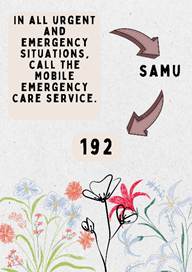
Based on the identification of the older adults' knowledge needs, it was possible to plan actions that would assist them and adapt information to their reality and level of understanding. Initially, a booklet was created based on Basic Life Support (BLS) protocols and other scientific literature. The material featured a larger font size to facilitate readability and included images illustrating symptoms and suggested actions for each complication.
The content was based on the prior identification of the older adults' learning needs regarding BLS; thus, it included a distinction between "urgency" and "emergency" concepts, the SAMU phone number, and clinical situations requiring first aid, such as airway clearance, stroke, seizures, and fall prevention. This material aimed to provide a theoretical foundation for older adults, offering conceptual clarifications and information on signs and symptoms, as well as guidance on decision-making options.
Image 1 – Educational booklet on Basic Life Support
Source: Prepared by the author, 2024.
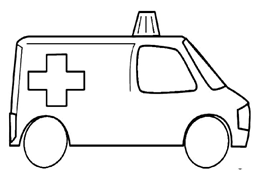
Since none of the participants knew the SAMU number, an image of an ambulance representing the service was provided to aid visualization (see Image 2). This action research enabled the implementation of a practical health education strategy in which the elderly participants wrote the SAMU number (192) in the center of the drawing using colored pens, aiming to foster engagement in the activity. Furthermore, they were advised to keep the material in a visible, easily accessible location to facilitate contacting the service in an emergency.
Image 2 – Illustrative ambulance representing the Mobile Emergency Care Service (SAMU).
Source: Google Images, 2024.
These issues were addressed and explored through a group discussion involving the participants and other professionals present during the activities. This approach fostered active and meaningful participation among the older adults, valuing their existing knowledge while reinforcing it with information based on scientific evidence. Regarding all the health incidents discussed, the participants were advised, prior to taking any decision or action, to assess the environment and avoid putting themselves at risk of becoming the next victim at the scene.
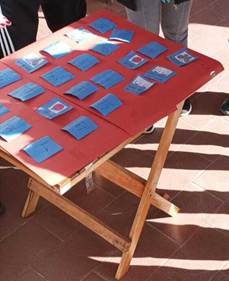
To stimulate cognition, concentration, and participation, a memory game was created for the participants. The game featured images of the health incidents alongside other interactive images. This activity linked prior knowledge of the previously discussed urgent and emergency situations with exercises in concentration and memory, aiming to ensure comprehension of the material, as shown in Image 3.
Image 3 – Image of the memory game developed and adapted for identifying first aid signs.
Source: Image provided by the author, 2024.
Regarding cardiac arrest and foreign-body airway obstruction, many older adults are unaware of—or struggle to determine, the appropriate course of action when faced with an urgent or emergency situation. However, it is crucial to emphasize the importance of contacting SAMU (the mobile emergency care service), given the need for professional care, specialized equipment, and hospital transport.
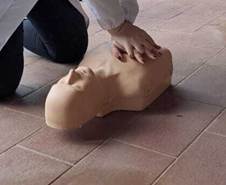
In this context, understanding the appropriate actions is essential for administering first aid. Consequently, the researcher demonstrated CPR maneuvers (Image 4) and the Heimlich maneuver for clearing foreign-body airway obstructions using a specialized training mannequin. Furthermore, the older adults were encouraged to practice these techniques themselves, both on the mannequins and on their own bodies.
Image 4 – Manikin used to conduct the realistic simulation
Source: Image provided by the author, 2024.
Finally, in collaboration with the municipality's E-multi team, which conducts diverse activities with the aforementioned group of older adults, a physical activity circuit was planned. This circuit incorporated exercises targeting motor coordination, balance, agility in navigating around objects, and the strengthening of skills related to Activities of Daily Living (ADLs). The entire session was guided and supported by the professionals present, who assisted older adults who encountered difficulties while navigating the circuit.
Furthermore, for the memory game and motor strengthening exercises, participants were divided into two groups to facilitate everyone's involvement in the proposed activities, while professionals and the researcher provided supervision, assistance, and guidance throughout the session.
DISCUSSION
Regarding knowledge of Basic Life Support (BLS), the literature indicates that people across all age groups, particularly laypeople, struggle to identify what it entails and how to act. A study conducted in Bahia involved 106 lay participants who answered questions about their knowledge of BLS and appropriate management of such situations. Regarding prior first aid training, 41 participants had previously taken a course; however, when assessed on their knowledge of the signs and symptoms of an emergency, such as acute myocardial infarction (AMI)—only 34 people were able to identify them correctly(14).
This highlights the importance of periodic first aid training. A study conducted in Slovenia, covering a population over the age of 18, examined knowledge regarding urgent and emergency clinical situations, decision-making, and the timing of previous training. Regarding the latter, it was found that among the elderly population, more than 70% of participants in this age group had last undergone training over 10 years ago, while 11% had never received such training(15).
In 2022, the São Paulo City Government, in collaboration with various municipal departments and the Mobile Emergency Care Service (SAMU) developed a first aid manual for laypeople. This document uses accessible language and includes illustrations of various urgent and emergency clinical conditions, describing the actions and management steps that a layperson can identify and perform. This initiative aims to facilitate better decision-making in situations requiring rapid or immediate care, potentially improving the victim's chances of survival(16).
One situation requiring first aid and one that commonly affects the elderly is the risk of falls. Thus, 201 older adults participated in a study analyzing risk factors for falls, as well as sociodemographic, health-related, and recurrence-related associations. Participants identified household risk factors such as poor nighttime lighting (75.6%), getting up during the night (81.6%), the presence of pets (53.7%), slippery floors (56.7%), and uneven flooring (48.8%), among others(17). These findings demonstrate that older adults generally understand the existence of risks and factors that can contribute to or facilitate falls.
Furthermore, gerontechnologies serve as important health education strategies to address these conditions. Conceptually, the term combines "Gerontology"—referring to the study of human aging and "technology." Consequently, the aim is to consider developed technologies or technological advancements within the context and reality of the older adult, thereby fostering greater social participation, health promotion, and independence(18).
In Brazil, a law regarding the inclusion of persons with disabilities was enacted; one of its articles addresses assistive technologies, such as devices, resources, practices, and equipment—as diverse tools designed to assist individuals with disabilities or reduced mobility, aiming to foster greater social participation and independence(19). Consequently, gerontechnologies can assist older adults in various life scenarios, ranging from assistive technologies that support the performance of Activities of Daily Living (ADLs) and Instrumental Activities of Daily Living (IADLs) to those facilitating leisure, housing, communication, mobility, and transportation(20).
Concurrently, there are educational gerontechnologies, developed in response to significant changes driven by new technologies and everyday situations, which adapt educational processes to the understanding and reality of older adults, serving as tools that foster the individual's social inclusion and participation(21). An integrative literature review revealed that certain gerontechnologies can help older adults understand first-aid procedures for use in high-risk situations. The studies analyzed focused on fall prevention and primarily utilized booklets, models, videos, and educational games(22).
One educational resource, a board game was also reported to be effective in engaging older adults and encouraging reflection. While the study focused on promoting self-care, it also addressed fall prevention. Benefits were noted regarding the game's visual design, which enabled active participation by all older adults regardless of their level of formal education—while valuing their individual and collective experiences(23).
Regarding the value placed on participants' prior knowledge, Paulo Freire argues that the educational process should not rely on the mere transfer of knowledge but rather on the shared construction of knowledge through dialogue, lived experiences, and the attribution of meaning. Furthermore, he emphasizes the importance of respecting each individual's autonomy and learning process(24). In this regard, considering the various stages of an older adult's life—as well as their accumulated life experiences and incorporating these elements into educational initiatives fosters their active, critical, and reflective participation in the health education process.
Realistic simulations serve as a strategy to bridge prior knowledge and scientific concepts with practical application. They act as facilitators for managing clinical situations that require immediate intervention by anyone present at the scene, whether laypeople or healthcare professionals. One study conducted first aid training and refresher courses for both laypeople and interested healthcare professionals; of the 100 participants, 57% were laypeople. Pre-test questionnaires were administered to assess prior knowledge, while post-training questionnaires evaluated the assimilation of the content and the activity(25).
In the same study, realistic first-aid simulation mannequins were used for training, complemented by theoretical discussions of the scenarios; these sessions were adapted and held in separate rooms for each target audience. Topics covered included cardiac arrest, foreign-body airway obstruction, fainting, fractures, and similar issues. Results showed that, prior to training, both laypeople and professionals held some misconceptions regarding the appropriate actions for these situations. However, after the realistic simulation, when the same questionnaire was administered, participants reported correct first-aid procedures. Furthermore, all participants recommended this type of training for others(25).
In Brazil, Health Care Networks (RAS) comprise various thematic networks, one of which is the Urgency and Emergency Care Network. This network encompasses different care settings, including Primary Health Care and SAMU (Mobile Emergency Care Service). It is also linked to health promotion, prevention, and surveillance, involving the coordination of user-oriented health education and continuing education for system professionals, with the aim of promoting health and preventing or minimizing health issues(26).
However, a study conducted in a Polish city involving Primary Health Care (PHC) professionals and administrative staff identified variations in knowledge regarding Basic Life Support (BLS), particularly concerning cardiac arrest. While most responses regarding the resuscitation sequence and the severity of the situation were correct, there was a lower rate of correct answers in other areas specifically regarding hand placement during CPR maneuvers and the frequency of chest compressions(27). This indicates a need for ongoing training updates to ensure better management and guidance in urgency and emergency situations.
The data align with a Brazilian study involving professionals from a Basic Health Unit regarding Basic Life Support (BLS) and in situ simulations. Approximately 67% of the participants had not undergone training in BLS or urgent and emergency care. However, regarding clinical practice at the unit, half of the participants reported having encountered situations requiring first aid. Furthermore, only 25% of the total group felt competent to manage BLS within Primary Health Care (PHC). When researchers linked theoretical knowledge with the in situ simulations performed by the participants, the latter reported benefits, particularly regarding learning and skill retention(28).
In a coordinated manner, PHC and consequently the professionals working within it must also consider the perceptions of older adults regarding the context of emerging health issues, care delivery, access, and health education activities. A survey conducted in Sweden examined adults' expectations regarding PHC services. Key factors identified included good communication between the team and the service user, individualized care planning, and longitudinal follow-up(29).
Nurses play a pivotal role in this scenario, as their responsibilities allow them to serve as a link between the very old, older adults, other professionals, health services, and society. Their practice encompasses complex, multidimensional care, fostering transparent communication that addresses both health characteristics and potential limitations in health literacy. Thus, promoting health education actions tailored to the local reality, co-constructing knowledge with service users, and facilitating self-awareness are elements that position the nurse as an agent of transformation who strengthens the autonomy of older adults(30).
Study limitations include the period during which the research was conducted, as the state was affected by extreme weather conditions that occasionally hindered the active participation of all group members. Nevertheless, positive contributions were observed regarding learning and the reinforcement of knowledge concerning signs and symptoms that could progress to an imminent life-threatening risk. Thus, empowering older adults with information, while also demonstrating in practice what to do in such situations—can be significant in aiding decision-making.
Finally, it is suggested that further studies on this topic be conducted by a multidisciplinary team to include a larger number of older participants, particularly those linked to Primary Health Care (PHC). PHC serves as the point of connection between users and health services and, consequently, acts as the primary link for health education within the population.
FINAL CONSIDERATIONS
Thus, it is crucial to understand the elderly's perceptions and knowledge regarding Basic Life Support in order to plan and adapt reflective interventions tailored to their specific realities. Furthermore, encouraging active participation and valuing their existing knowledge fosters greater engagement, as participants often grasp the gravity of the situation yet lack the know-how to act effectively.
Additionally, addressing a lack of familiarity with the SAMU (emergency medical service) number and incorporating an activity where participants write the number on a model ambulance—can help prepare them for urgent situations. Given the growing elderly population and the professional goal of strengthening autonomy and independence in scenarios requiring rapid decision-making, health education is essential.
Another relevant factor in the study was the integration with the multidisciplinary team and Community Health Agents (ACS), who already had established relationships with the group of older adults. This facilitated greater flexibility in communication, planning, and organizing the activities. Above all, however, the integration of diverse professionals—aiming to address the needs of the elderly in a multidimensional way promoted an approach that values care at both the individual and collective levels.
REFERENCES
1. World Health Organization (WHO). Ageing and health. World Health Organization [Internet] 2025 [cited 2026 Jul. 09]. Available from: https://www.who.int/news-room/fact-sheets/detail/ageing-and-health.
2. Presidência da República (BR). Lei nº 14.423, de 22 de julho de 2022. Dispõe sobre o Estatuto da Pessoa Idosa e dá outras providências. Presidência da República. Brasília-DF; 2022. [citado 2026 Abr. 22]. Disponível em: https://www.planalto.gov.br/ccivil_03/_ato2019-2022/2022/lei/l14423.htm#art1.
3. Ministério da Saúde (BR). Guia de Cuidados para a Pessoa Idosa. Brasília-DF: Ministério da Saúde; 2023. [citado 2026 Abr. 23]. Disponível em: https://bvsms.saude.gov.br/bvs/publicacoes/guia_cuidados_pessoa_idosa.pdf.
4. Gobbens RJJ, Kuiper S, Dijkshoorn H, Assen MALM van. Associations of individual chronic diseases and multimorbidity with multidimensional frailty. Arch Gerontol Geriatr [Internet] 2024 [cited 2026 abr 22]. DOI: 10.1016/j.archger.2023.105259. Available from: https://www.sciencedirect.com/science/article/pii/S0167494323003370?via%3Dihub.
5. Blayney MC, Reed M, Masterson JA, Anand A, Bouamrane MM, Fleuriot J, et al. Multimorbidity and adverse outcomes following emergency department attendance: population based cohort study. BMJ Med. [Internet] 2024 [cited 2026 abr 22] 16;3(1):e000731. DOI: 10.1136/bmjmed-2023-000731. Available from: https://pubmed.ncbi.nlm.nih.gov/39184567/.
6. Ministério da Saúde (BR). Portaria nº 2.436, de 21 de setembro de 2017. Aprova a Política Nacional de Atenção Básica. Ministério da Saúde. Brasília-DF; 2017. [citado 2026 Abr. 23]. Disponível em: https://bvsms.saude.gov.br/bvs/saudelegis/gm/2017/prt2436_22_09_2017.html.
7. Kleinman ME, et al. Part 7: Adult Basic Life Support: 2025 American Heart Association Guidelines for Cardiopulmonary Resuscitation and Emergency Cardiovascular Care. Circulation American Heart Association [Internet] 2025 [cited 2026 Jul. 18]. Available from: https://www.ahajournals.org/doi/10.1161/CIR.0000000000001369.
8. Organização Mundial da Saúde (OMS). Década do Envelhecimento Saudável 2021–2030. Genebra: OMS; 2021 [citado 2026 Abr. 25]. Disponível em: https://www.who.int/es/initiatives/decade-of-healthy-ageing.
9. Thiollent M. Metodologia da pesquisa-ação. Edição comemorativa dos 40 anos da 1ª edição (1985). 19. ed. São Paulo: Cortez Editora; 2025.
10. Souza, VRS, Marziale MHP, Silva GTR, Nascimento PL. Tradução e validação para a língua portuguesa e avaliação do guia COREQ. Acta Paul Enferm [Internet] 2021 [citado 2026 Mar. 02] 34: eAPE02631. DOI: 10.37689/acta-ape/2021AO02631. Disponível em: https://acta-ape.org/article/traducao-e-validacao-para-a-lingua-portuguesa-e-avaliacao-do-guia-coreq/.
11. Bardin, L. Análise de conteúdo. São Paulo: Almedina Brasil; 2016.
12. Conselho Nacional de Saúde (BR). Resolução nº 466, de 12 de dezembro de 2012. Aprova as diretrizes e normas regulamentadoras de pesquisas envolvendo seres humanos. Diário Oficial da União. Brasília-DF; 2013. [citado 2026 Abr. 09]. Disponível em: https://bvsms.saude.gov.br/bvs/saudelegis/cns/2013/res0466_12_12_2012.html.
13. Conselho Nacional de Saúde (BR). Ministério da Saúde. RESOLUÇÃO Nº 510, DE 7 DE ABRIL DE 2016. Dispõe sobre as normas aplicáveis a pesquisas em Ciências Humanas e Sociais. Diário Oficial da União. Brasília-DF; 2016. [citado 2026 Abr. 09]. Disponível em: https://bvsms.saude.gov.br/bvs/saudelegis/cns/2016/res0510_07_04_2016.html.
14. Souza LA, Cecon RS, Takenami I, Palácio MAV. Conhecimento populacional sobre Suporte Básico de Vida e o Serviço de Atendimento Móvel de Urgência de um município do nordeste brasileiro. Rev Atenção à Saúde [Internet] 2024 [citado 2026 Abr. 21] e20248977. DOI: https//doi.org/10.13037/ras.vol22.e20248977. Disponível em: https://www.seer.uscs.edu.br/index.php/revista_ciencias_saude/pt_BR/article/view/8977/4145.
15. Šparovec ED, Slabe D, Eržen I, Kovačič U. The importance of elderly people knowing basic first-aid measures. BMC Emerg. Med [Internet] 2022 [cited 2026 Abr. 21]. DOI: https://doi.org/10.1186/s12873-022-00675-9. Available from: https://link.springer.com/article/10.1186/s12873-022-00675-9.
16. Lopes CO. Manual de primeiros socorros para leigos. Suporte Básico de Vida. São Paulo-SP: Secretaria Municipal de Saúde – SAMU-192 [Internet] 2022 [citado 2026 Abr. 18]. Disponível em: https://docs.bvsalud.org/biblioref/2024/05/1554423/manual_primeiros_socorros_para_leigos.pdf.
17. Lyra CR, Silva EQ, Lima LA, Santos EP, Júnior JRAN, Oliveira DV. Presence of home fall risk factors, fall perception, and fear of falling in older adults: a cross-sectional study. Fisioter Mov [Internet] 2025 [cited 2026 abr 21] e38105. DOI: https://doi.org/10.1590/fm.2025.38105. Available from: https://www.scielo.br/j/fm/a/PS8TY3Nk5QvR4LbN3NJp8ny/?lang=en.
18. Castro PC, Doll J. Introdução ao estudo da gerontecnologia. In: Tratado Brasileiro de Gerontecnologia: tecnologia, inovação e cuidado para uma sociedade que envelhece. 1ª. ed. Curitiba: Ás Editorial; 2026.
19. Presidência da República (BR). Lei nº 13.146, de 6 de julho de 2015. Institui a Lei Brasileira de Inclusão da Pessoa com Deficiência (Estatuto da Pessoa com Deficiência). Presidência da República. Brasília-DF; 2015 [citado 2026 Jul. 09]. Disponível em: https://www.planalto.gov.br/ccivil_03/_ato2015-2018/2015/lei/l13146.htm.
20. Cruz GP, Facioli MSB. Vida diária: Tecnologia assistiva no apoio às atividades básicas e instrumentais de vida diária. In: Tratado Brasileiro de Gerontecnologia: tecnologia, inovação e cuidado para uma sociedade que envelhece. 1ª. ed. Curitiba: Ás Editorial; 2026.
21. Cachioni M, Doll J, Oliveira RR. Gerontecnologia educacional. In: Tratado Brasileiro de Gerontecnologia: tecnologia, inovação e cuidado para uma sociedade que envelhece. 1ª. ed. Curitiba: Ás Editorial; 2026.
22. Pereira RMO, Chagas AFS, Panarra BACS, Souza SV, Esteves AVF. Gerontotecnologia sobre primeiros socorros para pessoas idosas: uma revisão integrativa. Cogitare Enferm [Internet] 2025 [citado 2026 Abr. 25] e98932pt. DOI: http://dx.doi.org/10.1590/ce.v30i0.98932pt. Disponível em: https://www.revenf.bvs.br/scielo.php?script=sci_arttext&pid=S1414-85362025000100505.
23. Ramos TMR, Arruda MA, Sobral HFN, Maciel MJL, Silva KR, Morais YJGA, et al. Caminho do Autocuidado: Uma Experiência Lúdica para a Promoção da Saúde de Pessoas Idosas. Rev Nursing [Internet] 2025 [citado 2026 Abr. 18]. DOI: 10.36489/nursing.2025v30i328p11408-11419. Disponível em: https://www.revistanursing.com.br/index.php/revistanursing/article/view/3406/4227.
24. Freire P. Pedagogia da Autonomia: Saberes necessários à prática educativa. São Paulo: Paz e Terra; 1996.
25. Paiva WR, Rodrigues VAS. Treinamento de primeiros socorros para leigos e profissionais de saúde: avaliação de aprendizagem. Rev Enferm UFJF [Internet] 2024 [citado 2026 Abr. 18]. DOI: https://doi.org/10.34019/2446-5739.2024.v10.40871. Disponível em: https://periodicos.ufjf.br/index.php/enfermagem/article/view/40871/27189.
26. Ministério da Saúde (BR). Portaria de consolidação nº 3, de 28 de setembro de 2017. Consolidação das normas sobre as redes do Sistema Único de Saúde. Ministério da Saúde. Brasília-DF; 2017 [citado 2026 Abr. 09]. Disponível em: https://cetadobserva.ufba.br/sites/cetadobserva.ufba.br/files/3_0.pdf.
27. Wójcik R, Kłosiewicz T, Puślecki M. Basic Life Support Knowledge and Simulated Chest Compression Performance Among Primary Health Care Staff: A Multicentre Cross-Sectional Study. J Clin Med [Internet] 2026 [cited 2026 Jul 09] 15(12), 4460. DOI: https://doi.org/10.3390/jcm15124460. Available from: https://www.mdpi.com/2077-0383/15/12/4460.
28. Silva BIRF, Carreiro BO, Romão LGB, Mazzo A, Costa RRO. Simulação in situ para o treinamento de Suporte Básico de Vida no contexto da Atenção Primária: estudo piloto. Rev Enferm Atual In Derme [Internet] 2023 [citado 2026 Jul. 09] 97(esp):e023075. Disponível em: https://revistaenfermagematual.com.br/revista/article/view/1731/3483.
29. Oster A, Wiking E, Nilsson GH, Olsson CB. Patients’ expectations of primary health care from both patients’ and physicians’ perspectives: a questionnaire study with a qualitative approach. BMC Primary Care [Internet] 2024 [cited 2026 Abr 21]. DOI: https://doi.org/10.1186/s12875-024-02389-2. Available from: https://link.springer.com/article/10.1186/s12875-024-02389-2#Tab3.
30. Medeiros AB, Dias LL, Santos MC, Silva MH. The role of nursing in the humanization of the health of the elderly person in the basic care. Rev Multidisciplinar Nordeste Mineiro [Internet] 2023 [cited 2026 Abr 14]. DOI: https://doi.org/10.61164/rmnm.v10i1.1482. Available from: https://remunom.ojsbr.com/multidisciplinar/article/view/1482/2796.
Funding:
The authors declare that the research received no funding.
Data availability statement
No datasets were generated in this study. The information presented is described in the body of the article.
Conflict of interest statement
None to declare.
Authorship criteria (author contributions)
Natália Weber Weber: 1. Substantial contribution to the conception and/or planning of the study; 2. acquisition, analysis, and/or interpretation of data; 3. drafting and/or critical revision and final approval of the published version.
Gabriele Conceição da Silva: 1. Substantial contribution to the conception and/or planning of the study; 2. acquisition, analysis, and/or interpretation of data; 3. drafting and/or critical revision and final approval of the published version.
Therik Decian Mello: 1. Substantial contribution to the conception and/or planning of the study; 2. acquisition, analysis, and/or interpretation of data; 3. drafting and/or critical revision and final approval of the published version.
Ana Luiza Dalazen: 1. Substantial contribution to the conception and/or planning of the study; 2. acquisition, analysis, and/or interpretation of data; 3. drafting and/or critical revision and final approval of the published version.
Maria Helena Gehlen: 1. Substantial contribution to the conception and/or planning of the study; 2. acquisition, analysis, and/or interpretation of data; 3. drafting and/or critical revision and final approval of the published version.
Naiana Oliveira dos Santos: 1. Substantial contribution to the conception and/or planning of the study; 2. acquisition, analysis, and/or interpretation of data; 3. drafting and/or critical revision and final approval of the published version.
Scientific Editor: Ítalo Arão Pereira Ribeiro. Orcid: https://orcid.org/0000-0003-0778-1447
Rev Enferm Atual In Derme 2026;100(3): e026075